Please Choose Your Language


Views: 0 Author: Site Editor Publish Time: 2026-07-18 Origin: Site


High-volume food processing presents a persistent daily challenge. Operators must balance rapid temperature control alongside consistent batch uniformity continually. Achieving this delicate balance determines your overall operational success. It marks the difference between a highly profitable run and costly ingredient waste. Traditional static tanks frequently suffer from localized burning. We commonly call this burn-on or fouling. These older vessels create highly inconsistent thermal gradients. This structural flaw leads to severe yield loss. It compromises delicate taste profiles rapidly. It also causes excessive cleaning downtime between production runs.
Upgrading your facility to a specialized rotating heating mixing tank solves these core issues. This equipment synchronizes active thermal transfer alongside continuous mechanical agitation. You will discover how this integration mitigates product degradation effectively. It accelerates your heating and cooling cycle times dramatically. We will also explore how dynamic vessels simplify modern sanitary compliance for contemporary food manufacturing operations.
Poor heat transfer hurts food processors financially every single day. Standard equipment frequently damages delicate ingredients. We see prolonged batch times eating into tight production schedules. Prolonged heat exposure destroys volatile flavor compounds quickly. Plant managers routinely notice irregular color changes across different batches. These operational issues ruin product consistency completely. When customers notice varied taste profiles, brand loyalty drops. You lose market share when quality fluctuates.
High-viscosity items pose particularly severe processing challenges. Sauces, dense syrups, and heavy dairy products resist simple convection heating. They cling stubbornly to interior vessel walls. A standard mixing tank often lacks the necessary scraping action. Product literally bakes onto the hot boundary layer. We call this frustrating phenomenon burn-on. Fouling creates a stubborn insulating barrier inside your vessel. This baked-on barrier drastically slows down further heat transfer. You must pump more heat into the system just to maintain target temperatures.
You also waste immense amounts of utility energy. Heating a static or poorly mixed batch remains highly inefficient. Your utility boilers consume massive fuel volumes. However, this generated thermal energy fails to distribute uniformly. Cold spots form near the center of the mixture. Dangerous hot spots plague the outer metallic walls. You end up paying for this thermal energy twice. First, you pay your utility provider to generate the heat. Second, you pay massive labor costs to clean up the burnt residue. Inefficient mixing drains plant resources continuously.
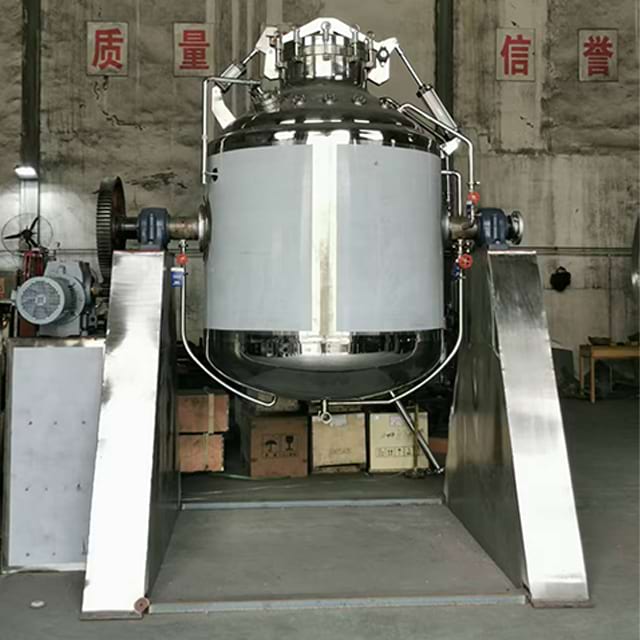
Modern processing vessels combine dynamic rotation alongside active thermal jacketing. This smart engineering synergy transforms basic heat transfer entirely. Jackets typically feature advanced dimpled designs or welded half-pipe coils. Dimple jackets handle low-pressure steam or hot fluid effectively. They distribute thermal energy across a very wide surface area. Half-pipe coils handle higher pressure requirements safely. They channel fluids at high velocities for rapid temperature changes.
Managing thermal boundary layers remains absolutely critical. The boundary layer acts like an invisible thermal shield inside the vessel. Continuous rotation constantly strips away this stagnant fluid layer. Scraped-surface agitators physically sweep the interior stainless steel wall. They push newly heated product toward the cooler central vortex. They simultaneously pull cooler product toward the hot exterior wall. This constant fluid renewal maximizes your overall heat transfer coefficient. Engineers commonly refer to this metric as the U-value. A high U-value guarantees rapid, uniform batch heating.
You must always account for mechanical heat generation. High-shear stirring creates intense fluid friction. This friction adds unexpected energy directly into the mixture. We observe several mechanical heat factors during heavy operations:
Operators must factor these dynamic elements into the control system. Neglecting mechanical heat causes accidental over-processing easily. Proper sensor integration prevents accidental overheating. The automation system backs down the steam valve automatically. It compensates for the mechanical energy generated by the heavy agitator blades.
Optimizing your thermal process yields immediate timeline improvements. A purpose-built rotating heating tank accelerates thermal ramp-up phases noticeably. You reach critical target pasteurization temperatures much faster. Subsequent cooling phases also speed up considerably. Faster cycles mean you process many more batches daily. Higher throughput directly increases daily factory revenue.
Gentle handling preserves delicate ingredient structures beautifully. Shear-sensitive foods require extremely careful processing. Think about premium fruit preserves or hearty chunky stews. Aggressive blending destroys suspended particulates rapidly. Synchronized rotation maintains structural integrity perfectly. You achieve rapid cooking without pureeing the raw ingredients. Consumers expect visible fruit chunks or distinct vegetable pieces. Careful, measured agitation delivers this expected quality consistently. You never compromise texture for the sake of speed.
Consolidating your workflow reduces your facility footprint. Standard operations often require complex multi-vessel transfers. You heat ingredients in one dedicated vessel. You pump them to another vessel for mixing. Moving hot, viscous fluids poses serious safety risks to operators. It also wastes highly valuable factory floor space. Single-vessel processing eliminates these messy transfer steps entirely. You lower operator intervention significantly. Fewer transfer pumps mean fewer mechanical points of failure.
| Performance Metric | Static/Standard Equipment | Synchronized Rotating Equipment |
|---|---|---|
| Thermal Ramp-Up Speed | Slow and highly uneven | Rapid and completely uniform |
| Product Burn-On Risk | High (requires manual scraping) | Near zero (continuous sweeping action) |
| Energy Utilization | Poor (heat stays trapped at walls) | Excellent (maximized U-value) |
| Floor Space Needed | Large (multiple transfer vessels) | Compact (all-in-one processing design) |
Cleanability dictates all equipment design in modern food manufacturing. Dynamic agitation physically prevents internal dead zones. Dead zones harbor dangerous bacterial growth. You need continuous fluid motion over all interior surfaces. We strictly specify 316L stainless steel for all wetted parts. This premium alloy resists corrosion from highly acidic foods. It also withstands harsh alkaline cleaning chemicals. Surface finishes must meet strict roughness averages. Engineers typically require an Ra value under 0.8 micrometers. Smooth surfaces give dangerous microbes nowhere to hide.
These vessels integrate seamlessly into automated cleaning protocols. Clean-in-Place (CIP) relies on strong chemical action. Sterilize-in-Place (SIP) utilizes pressurized steam. Both systems require strong mechanical force. A rotating mechanism actively aids this entire sanitation process. Running the agitator distributes cleaning agents aggressively. It splashes caustic solutions onto the upper tank dome. The physical scraping action removes stubborn organic soils effortlessly. You use significantly less water and fewer chemicals. This reduces your total plant wastewater volume heavily.
Regulatory alignment remains entirely non-negotiable today. Leading designs conform to strict FDA requirements closely. They also follow stringent 3-A Sanitary Standards for dairy processing. European operations look for strict EHEDG compliance. Equipment makers remove threaded connections from the product zone. They eliminate crevice-prone O-ring grooves entirely. Every single weld undergoes rigorous polishing and chemical passivating. These careful engineering choices ensure your facility passes unexpected audits easily.
Choosing the correct internal mechanism prevents frustrating future bottlenecks. Agitator design must match your specific product viscosity closely. Low-viscosity emulsions benefit from high-speed turbine mixers. Turbines create intense localized shear forces. Heavy, sticky products require completely different physics. Caramel, cheese curds, or thick syrups need heavy-duty anchor agitators. We equip these anchors using food-grade Teflon scrapers. High-torque gearboxes prevent the motor from stalling when viscosity spikes. The scrapers physically hug the heated interior walls. They wipe the metallic surface clean every single rotation.
Selecting your heating media involves several crucial engineering trade-offs. You must evaluate your thermal utilities:
You must evaluate your specific food application carefully. A fast rolling boil requires pressurized steam. A gentle, prolonged simmer demands controlled hot water.
Control system integration defines modern batch consistency. Localized PLC units handle basic motor speeds and valves. However, modern facilities demand more sophisticated digital oversight. You should integrate the unit into your plant-wide SCADA system. Automated recipe management eliminates costly human error entirely. Operators simply select the pre-programmed product cycle. The system modulates heat valves and agitator RPM automatically. It also generates verifiable digital batch reports. These detailed reports prove strict regulatory compliance for every single production run.
Investing in specialized processing equipment drives measurable plant profitability. Synchronized heating and agitation offer a direct yield recovery mechanism. You reclaim valuable lost product previously burnt onto sidewalls. You drastically shorten lengthy daily production cycles. Upgrading your core vessel resolves multiple operational headaches simultaneously.
Success heavily depends on highly accurate upfront engineering calculations. Buyers must calculate total thermal loads very carefully. You must remember to include internal mechanical heat generation. Specifying the exact scraper profile ensures consistent processing outcomes. Taking shortcuts during specification often leads to deeply compromised line performance.
Take immediate action to improve your processing facility. We recommend auditing your current batch cycle times today. Identify exactly where thermal bottlenecks slow down your line. Consult experienced equipment engineers for precise thermodynamic calculations. Finally, request thorough pilot testing using your specific product matrix. Real-world testing guarantees the hardware matches your exact recipe needs.
A: Yes, provided it is equipped with a high-torque drive and scraped-surface agitators that physically clear the heating boundary to prevent product from baking onto the sidewalls.
A: Standard models feature strategically placed spray balls and sanitary connections. The tank's own agitator can also be run at low speeds during CIP cycles to enhance chemical coverage and mechanical scrubbing.
A: Depending on customization (jacket type, automation integration, metallurgy), lead times generally range from 12 to 24 weeks. Installation requires evaluating existing utility hookups (steam, chilled water, electrical load for high-torque motors).