Please Choose Your Language


Views: 0 Author: Site Editor Publish Time: 2026-04-30 Origin: Site


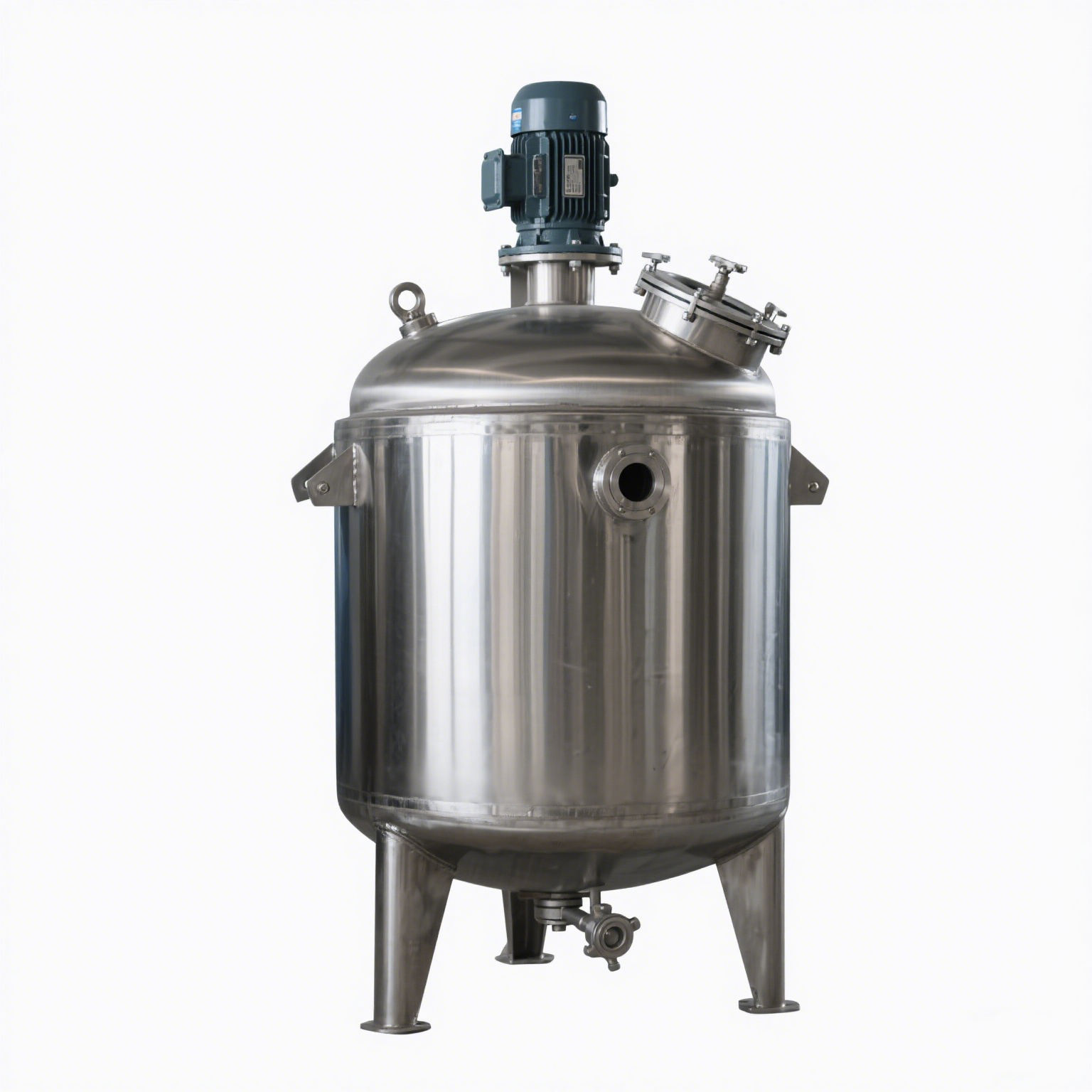
A high shear mixer homogenizer is a specialized industrial mixing device designed to apply extreme mechanical shear forces to materials, rapidly breaking down particles or droplets within a liquid medium to create a homogeneous mixture with uniform, often sub-micron, particle size distribution. Unlike simple agitators that merely blend ingredients, high shear homogenizers process the mixture, fundamentally altering its physical properties to improve stability, texture, bioavailability, and shelf life.
The core distinction lies in its ability to generate locally ultra-high turbulence and shear effects, making it invaluable for industrial processes such as mixing, emulsification, multiphase dispersion, and chemical reactions. Whether you're manufacturing cosmetics, pharmaceuticals, food products, or chemical formulations, this equipment stands at the heart of processes demanding intense mixing and consistent product quality.
The magic happens through a sophisticated combination of mechanical action and fluid dynamics, centered on the rotor-stator assembly. Understanding this mechanism is crucial for anyone involved in process engineering or production management.
1. Intake Stage: The high-speed rotation of the rotor creates a powerful suction force, drawing liquid and solid ingredients upward into the mixing head. This initial vacuum effect ensures continuous material feeding, preventing dead zones and maintaining consistent throughput.
2. Shearing Stage: Materials are forced at high velocity through the precision-engineered gap between the rapidly spinning rotor and the fixed stator. This is where intense mechanical shear occurs, subjecting particles to forces exceeding those found in traditional mixing equipment by several orders of magnitude. The clearance between rotor and stator components is typically measured in micrometers, enabling particle size reduction to microscopic dimensions.
3. Milling & Mixing Stage: As the product passes through the stator's slots or holes, it undergoes further cutting, milling, and hydraulic shear. The design of the stator—whether slotted, square hole, or fine screen—determines the final fineness of the emulsion or dispersion. Different stator configurations allow operators to optimize for specific applications, from coarse pre-mixing to ultra-fine final processing.
4. Expulsion & Recirculation Stage: The processed material is expelled from the mixing head at high velocity back into the main vessel, creating a rapid, efficient circulation pattern. This ensures every portion of the batch passes repeatedly through the high-shear zone, leading to uniform end products. The continuous circulation achieves in seconds what conventional methods require minutes or hours to accomplish.
When the rotor spins at speeds reaching up to 35,000 revolutions per minute, it creates a pressure differential that simultaneously pulls fresh material into the workhead while expelling processed mixture outward. This high-shear environment rapidly breaks down agglomerates, disrupts cell walls for biological samples, and creates stable emulsions by reducing droplet sizes to dimensions that resist coalescence.
The effectiveness stems from three simultaneous mechanisms:
Mechanical shear from rotor-stator interaction
Hydraulic shear from high-velocity fluid flow
Cavitation effects from pressure differentials
The ability to create stable micro-emulsions and uniform dispersions makes this equipment vital across multiple sectors.
In food manufacturing, high shear mixer homogenizers are essential for producing mayonnaise, sauces, dressings, ketchup, baby food, fruit purees, and non-dairy milks like almond or oat milk. The equipment ensures consistent texture and prevents phase separation, which is critical for consumer acceptance and shelf stability.
Pharmaceutical and cosmetic manufacturers rely on these machines for creams, lotions, ointments, gels, and syrups where consistent particle size is critical for efficacy and absorption. In pharmaceutical applications, the ability to achieve sub-micron particle sizes can significantly improve bioavailability of active ingredients.
Chemical manufacturers use high shear homogenizers for creating stable pigment dispersions, adhesive emulsions, and polymer solutions. The equipment's ability to handle abrasive, corrosive, or shear-sensitive materials makes it indispensable for specialty chemical production.
With the rapid development of the lithium battery energy storage industry, high shear mixers have found critical application in anode slurry preparation. The locally ultra-high turbulence and shear effects enable uniform dispersion of active materials, directly impacting battery performance and consistency.
While often used interchangeably, these technologies serve different purposes and excel at different stages of the mixing process.
Feature | High Shear Mixer | Homogenizer |
|---|---|---|
Shear Type | Mechanical (rotor-stator) | Hydraulic (pressure drop) |
Particle Size | 1–5 μm | Submicron (0.1–1 μm) |
Use Stage | Pre-mix, batch, continuous | Final finishing, continuous |
Viscosity Range | Wide range | Low to medium |
Maintenance | Low | Medium to high |
A high shear mixer uses a mechanical rotor-stator system to generate intense localized shear, dispersing and emulsifying materials. It's ideal for primary mixing and pre-emulsification, particularly when dealing with viscous ingredients or batch processing.
A homogenizer, often high-pressure based, forces fluid through a narrow gap or valve, producing extreme pressure drops and turbulence to further reduce particle and droplet sizes. It's typically used for final-stage homogenization and particle size refinement in low to medium viscosity applications.
For optimal results, many processors implement integrated systems that combine both technologies: pre-emulsification with a high shear batch or inline mixer, followed by finishing with a high-pressure homogenizer. This approach maximizes processing efficiency and product stability across a wide range of formulations.
Choosing the right equipment requires careful evaluation of several critical factors.
Your material's viscosity directly impacts equipment selection. High shear mixers can handle a wide viscosity range, from thin liquids to thick pastes. Understanding your product's flow behavior under shear conditions is essential for selecting the appropriate rotor-stator configuration and motor power.
Define your target fineness in microns. For applications requiring particle sizes of 1–5 μm, a standard high shear mixer may suffice. For submicron requirements (0.1–1 μm), you may need a high-pressure homogenizer or an integrated system.
Your production volume determines whether batch or inline processing is more appropriate. Batch processing involves lowering the mixer head into a tank containing the full batch, while inline processing installs the homogenizer directly into a pipeline for continuous operation.
For food, pharmaceutical, and cosmetic applications, 316L stainless steel construction is typically required for corrosion resistance and easy cleaning. The material must be compatible with your product's chemical composition and withstand cleaning procedures.
If your application requires hygienic operation, look for equipment with CIP/SIP capabilities. Clean-in-place and sterilize-in-place features enable thorough cleaning without disassembly, reducing downtime and contamination risks.
Choosing the right supplier is as crucial as selecting the machine itself. Here's a focused guide to inform your decision.
Before contacting suppliers, detail your needs thoroughly:
Product viscosity: Will you process thin liquids or thick pastes?
Desired particle size: What is your target fineness in microns?
Batch size or flow rate: What is your production volume?
Ingredients: Are they abrasive, corrosive, or shear-sensitive?
Industry standards: Do you require specific certifications like FDA-compliant materials, EHEDG for food, or cGMP for pharma?
A reputable supplier should act as a solutions partner rather than just a product vendor. Key considerations include:
Lab and trial support: Do they offer pilot-scale testing to confirm machine suitability for your specific product?
Custom engineering: Can they customize shaft length, mixing head design, or material of construction to fit your process vessel?
Process knowledge: Their engineers should understand emulsion science and recommend optimal rotor-stator configurations.
Examine the equipment's construction and design:
Construction materials: Look for robust, food/pharma-grade stainless steel with polished finishes for easy cleaning.
Seal technology: Mechanical seal quality is critical for preventing leakage and contamination.
Motor and drive: High-quality motors with variable frequency drives (VFDs) allow precise speed control and process optimization.
Hygienic design: Check for clean lines, minimal dead zones, and easy disassembly for cleaning.
The relationship begins after purchase. Evaluate:
Warranty coverage: What is the coverage period and terms?
Spare parts availability: Is there local or readily available inventory of wear parts like rotors, stators, and seals?
Technical service: Do they provide installation supervision, operator training, and prompt troubleshooting support?
Documentation: Are comprehensive operation and maintenance manuals provided?
While budget is important, the lowest upfront cost can lead to higher long-term expenses due to downtime, poor performance, or rapid wear. Evaluate total cost of ownership, including:
Energy efficiency
Maintenance costs
Durability and service life
Supplier support capability
Proper maintenance is essential for maximizing equipment performance and longevity.
Inspect mechanical seals for leaks or wear
Check rotor-stator clearance and alignment
Verify lubrication levels in bearings and gearboxes
Clean all product-contact surfaces immediately after use
Perform visual inspection of all electrical connections
Check V-belt tension and condition
Verify motor cooling system functionality
Examine stator slots for clogging or wear
Replace worn rotor and stator components as needed
Inspect and clean shaft seals
Check mounting bolts and fasteners for tightness
Verify alignment of motor and drive system
Complete overhaul of mechanical seals
Replace lubricants in gearboxes
Inspect bearings for wear or damage
Perform vibration analysis on rotating components
With proper maintenance and regular replacement of wear parts, a quality high shear mixer homogenizer can operate reliably for 10–15 years. The rotor and stator typically require replacement every 1–3 years depending on processing conditions and material abrasiveness.
The optimal configuration depends on your target particle size, viscosity, and emulsion type. Slotted stators are suitable for general emulsification, square hole stators provide more aggressive shear for difficult materials, and fine screen stators achieve the finest particle sizes. Pilot testing with your actual materials is strongly recommended.
Most manufacturers offer separate designs optimized for batch or inline operation. However, some multifunctional units can be adapted for both configurations with appropriate accessories. Inline homogenizers are typically preferred for continuous production, while batch units offer flexibility for smaller volumes.
For pharmaceutical use, look for equipment that complies with cGMP (current Good Manufacturing Practice) standards and features materials certified for pharmaceutical contact. FDA-compliant materials, 316L stainless steel construction, and CIP/SIP capabilities are essential. Some suppliers also offer documentation packages for validation purposes.
Request pilot-scale testing with your actual materials. Reputable suppliers should offer trial demonstrations that provide particle size analysis, processing time data, and power consumption measurements. Also, ask for references from customers in similar applications and request case studies documenting performance.
Common causes include processing abrasive materials without appropriate wear-resistant components, operating at excessive speeds for the application, inadequate cooling leading to thermal stress on seals, improper rotor-stator alignment, and insufficient lubrication of bearings. Regular maintenance and proper operating procedures can significantly extend equipment life.
Single-stage configurations (Stage 1) are suitable for simple emulsions and low-viscosity mixtures, achieving particle sizes of 50–70 microns. Two-stage (Stage 2) configurations provide enhanced emulsification for medium-viscosity applications, achieving 20–50 microns. Four-stage (Stage 4) configurations deliver advanced high-shear processing for demanding formulations requiring the finest particle sizes. Your choice depends on your target particle size and product complexity.
Total cost of ownership includes initial purchase price, installation costs, energy consumption, spare parts replacement frequency and cost, maintenance labor, downtime costs, and potential product losses from off-spec batches. Request energy consumption data and expected maintenance schedules from suppliers to make informed comparisons.
Essential safety features include emergency stop buttons, overload protection, temperature monitoring with automatic shutdown, shaft guards, lockout/tagout capabilities, and explosion-proof motor options for hazardous environments. For automated systems, PLC-controlled safety interlocks prevent operation under unsafe conditions.
Yes, but you need appropriate temperature control features. Look for units with water-cooled mechanical seals, jacketed vessels for heating or cooling, and temperature sensors integrated into the control system. Some advanced models offer precise temperature control throughout the processing cycle.