Please Choose Your Language


Views: 0 Author: Site Editor Publish Time: 2026-09-09 Origin: Site


Selecting the right thermal transfer method is a high-stakes engineering decision for any processing facility. Your choice directly impacts batch cycle times, utility costs, and overall product quality. The decision usually depends heavily on your existing facility infrastructure, particularly current boiler availability. It also relies on the specific temperature tolerances required by your unique chemical or food recipes. Selecting an incompatible system can lead to degraded materials, delayed production, or excessively high utility bills. This guide provides a side-by-side engineering and commercial evaluation of electrical heating versus traditional steam-heated vessels. We will examine the core mechanics, infrastructure demands, and performance metrics of each system in detail. By the end, you will clearly understand which industrial setup aligns best with your long-term production goals.
Infrastructure limits choice: Steam heating requires significant peripheral infrastructure (boilers, steam traps, water treatment), while electric heating requires high-amperage electrical panels.
Precision vs. Speed: Electric heating mixing tanks offer superior temperature precision for sensitive batches, whereas steam provides rapid, high-volume heat transfer.
Cost structures differ: Electric tanks generally have a lower total upfront capital expenditure (CapEx) for facilities without boilers, but steam can offer lower operational expenditures (OpEx) at scale in regions with cheap natural gas.
Product format: Steam systems commonly utilize a standard jacketed kettle design, while electric systems may use directly immersed elements or electrically heated thermal fluid jackets.
To make an informed decision, we must first understand how each technology physically transfers heat into your product. Both methods have distinct engineering principles governing their efficiency and application.
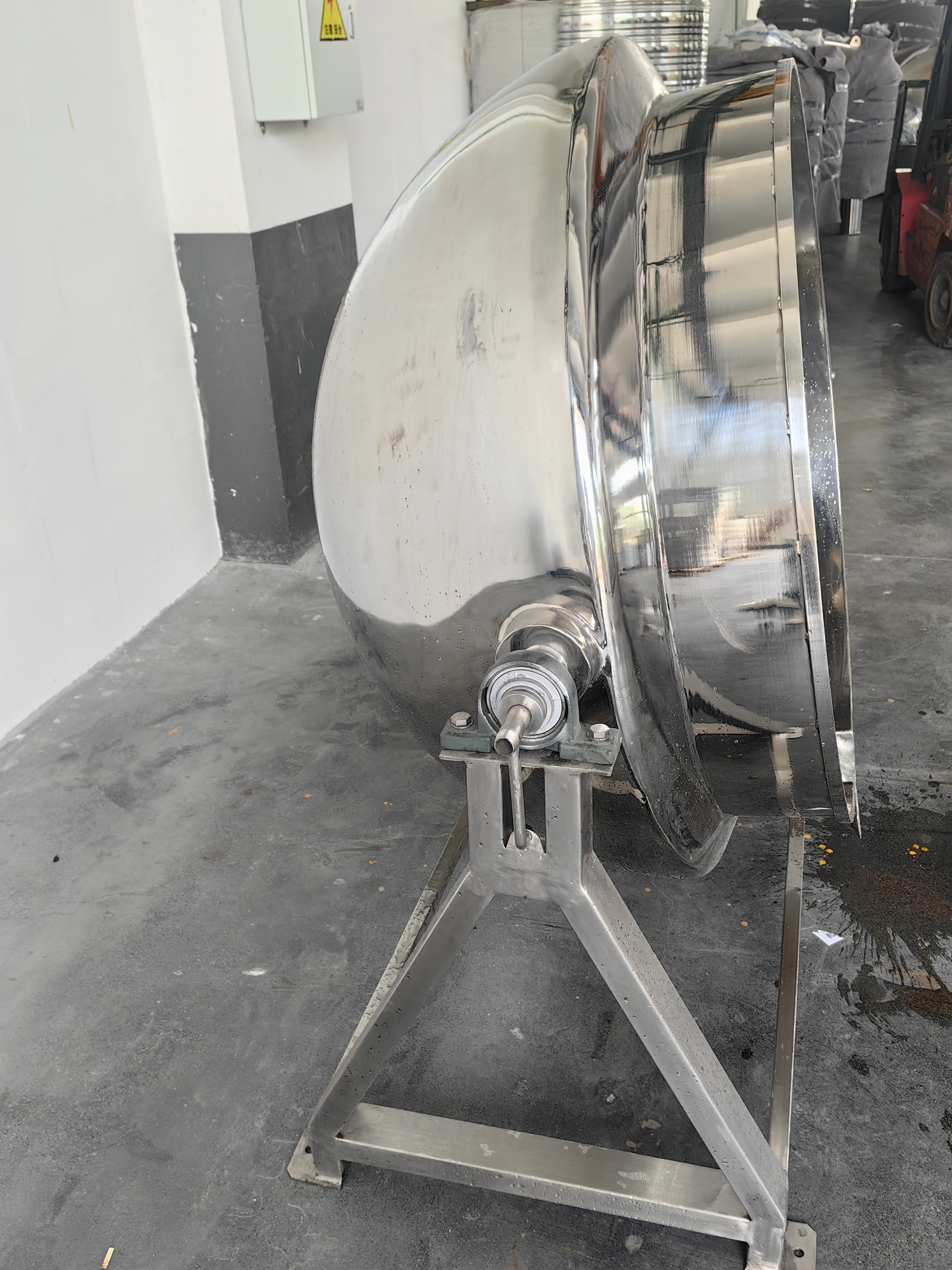
An Electric Heating Mixing Tank typically utilizes one of two primary designs. The first involves direct immersion heaters placed straight into the product. The second, and far more common for industrial applications, uses a heating jacket filled with a thermal transfer fluid. This fluid is usually water or specialized thermal oil.
Engineers insert electric heating elements directly into the jacket cavity. The elements heat the thermal fluid, which in turn heats the inner wall of the vessel. This indirect method prevents localized burning of sensitive materials. The energy conversion process is highly efficient. At the element itself, 100 percent of the electrical energy converts to heat. However, operators must account for ambient heat losses radiating from the exterior jacket shell. High-quality insulation cladding helps mitigate these system losses.
A steam heating tank, widely known as a Jacketed Kettle, operates on entirely different physics. It relies heavily on the latent heat of vaporization. The process begins when pressurized steam enters the empty jacket surrounding the vessel.
When the hot steam contacts the cooler inner vessel wall, it condenses back into liquid water. This phase change releases a massive amount of latent energy almost instantly. Because steam temperature correlates directly to steam pressure, temperature management relies entirely on pressure control. Operators manage the heat input by opening or closing automated control valves to regulate the incoming steam pressure. This delivers an incredibly fast and powerful heat transfer rate.
Your current building infrastructure dictates your heating options more than any other factor. Installing a new vessel requires a deep audit of your existing utilities.
Evaluating your utilities requires looking past the mixing tank itself. Both systems hide secondary infrastructure demands.
Steam systems carry significant hidden requirements. Facilities relying on steam must account for several major operational necessities:
Boiler Installation: You need an industrial boiler capable of generating sufficient steam volume.
Water Treatment: Boilers require chemically treated feed water to prevent internal scaling.
Blowdown Systems: Facilities must safely manage boiler blowdown to remove accumulated solids.
Steam Trap Maintenance: Failed steam traps blow live steam into return lines, wasting immense energy.
Annual Inspections: Most local jurisdictions mandate strict annual boiler inspections.
Conversely, electric systems challenge your facility's electrical load limits. You must size your electrical infrastructure to support a high kilowatt (kW) draw. An industrial heater pulling 100 kW requires massive electrical panels and thick cabling. Facilities frequently discover they lack sufficient amperage on their main breaker. Upgrading facility transformers to handle new heavy loads requires extensive planning and capital.
Space constraints often force a facility's hand during equipment selection. Electric tanks offer highly modular solutions. You can mount the control panel directly onto the vessel frame. The entire unit becomes portable. You can move it anywhere on the production floor, provided you drop a properly sized power cord. This flexibility proves invaluable in dynamic manufacturing environments.
Steam kettles lack this portability. They are fixed, hard-piped installations. Steam supply lines, condensate return lines, and pressure relief piping firmly lock the kettle into one specific footprint. Moving a steam kettle requires cutting and re-welding heavy-duty utility pipes.
Regulatory compliance differs wildly between the two technologies. High-pressure steam jackets fall squarely under ASME pressure vessel codes. Inspectors require properly stamped vessels to guarantee they can withstand the internal steam pressure safely. You must install, test, and certify pressure relief valves routinely.
Electric heaters face different regulatory hurdles, particularly in volatile environments. If you process flammable solvents, standard electrical panels pose an ignition risk. You must meet Class 1 Division 1 or Division 2 compliance. Sourcing explosion-proof electric heaters and control panels adds significant complexity and cost to the project.
Beyond infrastructure, the vessel must meet your recipe's specific thermal demands. Speed and precision are rarely equal in industrial heating.
When raw speed is the goal, steam reigns supreme. Steam delivers superior rapid heat-up times. This makes it ideal for high-volume continuous processing. The heat transfer coefficient of condensing steam far exceeds that of stagnant or slowly circulating thermal oil. If your process requires bringing a thousand gallons of cold water to a rolling boil quickly, steam achieves this faster than standard electric elements.
While steam offers speed, electric heating offers unmatched precision. Electric systems prevent aggressive temperature overshoots. By utilizing thermal oil jackets paired with PID (Proportional-Integral-Derivative) controllers, operators achieve incredibly stable temperature profiles.
The PID controller pulses power to the electric elements as the product approaches the target temperature. The thermal mass of the oil ensures gentle, even heat distribution across the vessel wall. This gentle heating prevents scorching. Such precision is crucial when manufacturing cosmetics, pharmaceuticals, or sensitive polymers that degrade under rapid heat spikes.
Many processes require rapid heating followed immediately by rapid cooling. A standard steam jacket handles this dual requirement easily. Once the heating cycle ends, operators shut off the steam, vent the jacket, and flush it with chilled water. The single jacket performs both functions effectively.
Electric thermal oil systems struggle with rapid cooling. Thermal oil acts as an excellent insulator and holds heat for a long time. You cannot simply flush cold water into a jacket filled with hot oil. Cooling an electric thermal oil tank requires circulating the hot oil out of the jacket and through an external heat exchanger. This adds mechanical complexity, requiring additional pumps and piping.
Evaluating the financial impact requires separating the upfront checks you write from the recurring bills you pay. We must analyze both capital expenditure and operational expenditure.
When comparing standalone unit costs, an electric vessel often carries a higher price tag than an identical capacity steam vessel. The electric unit includes built-in heating elements, thermal fluid, and an integrated control panel. A steam kettle is essentially an empty stainless steel shell awaiting external utilities.
However, the hidden CapEx changes the equation. If your facility lacks an existing boiler, building a new boiler room requires a massive capital outlay. You must purchase the boiler, run extensive stainless steel piping, and install ventilation. In contrast, upgrading an electrical transformer—while not cheap—rarely approaches the cost of a full boiler room installation. For new facilities, electric systems frequently offer a lower barrier to entry.
Operational costs look vastly different over a ten-year horizon. We must compare local utility rates. In many industrial regions, natural gas costs significantly less per BTU than industrial electricity. Firing a natural gas boiler to generate steam often yields a much lower monthly energy bill than powering high-draw electric elements. At a massive manufacturing scale, steam provides profound energy savings.
Maintenance realities also impact OpEx differently. Electric elements inevitably experience scaling or calcification over time, especially if used directly in water. You will need to budget for periodic element replacement. Steam systems demand rigorous, constant maintenance. Facility teams spend countless hours fixing steam leaks, rebuilding pressure regulating valves, and managing ongoing chemical water treatments.
Below is a comparative breakdown of key operational characteristics between the two systems.
Feature | Electric Heating System | Steam Heating System |
|---|---|---|
Heating Speed | Moderate to slow (depends on kW) | Extremely rapid |
Temperature Precision | High (prevents overshoot) | Moderate (prone to overshoot) |
Portability | High (modular plug-and-play) | Low (hard-piped in place) |
Facility Requirements | High-amperage electrical panels | Industrial boiler and water lines |
Cooling Adaptation | Complex (requires external exchangers) | Simple (chilled water flush) |
Choosing the correct equipment requires matching your specific operational reality to the technology. No single vessel works perfectly for every scenario.
Electric setups solve very specific facility constraints. We highly recommend shortlisting them under the following conditions:
You operate pilot plants, cleanrooms, or R&D labs with strict space constraints.
Your facility completely lacks existing steam infrastructure or natural gas lines.
Your product recipes require highly precise, uniform, and stable temperature profiles without any risk of burning.
You need the flexibility to move the mixing tank around the production floor as workflow demands change.
Steam remains the undisputed champion of heavy industry. We recommend shortlisting steam vessels under these conditions:
You operate large-scale food and beverage, rendering, or heavy chemical plants.
Your facility possesses an existing, underutilized boiler system with excess capacity.
Your daily processes require rapid, high-intensity heating to maximize batch turnover.
Your recipes require frequent, rapid cooling cycles executed inside the same process vessel.
Before requesting vendor quotes, you must perform internal due diligence. First, audit your current utility capacity. Verify your available electrical amperage or your boiler's excess steam output. Next, calculate the exact heat load required for your specific batch size and target heat-up time. Calculate this requirement in either kW or BTU/hr. Having these exact numbers ensures vendors quote appropriately sized equipment rather than guessing your needs.
Selecting between electric and steam thermal transfer methods fundamentally shapes your production efficiency. Neither technology is universally superior. The correct selection is strictly dictated by your operational scale, your existing building infrastructure, and the thermal sensitivity of your raw materials.
Electric systems provide unmatched precision, portability, and independence from complex boiler networks. They excel in high-value, sensitive batch processing. Steam systems deliver unparalleled heating speed, superior scalability, and simplified cooling cycles. They dominate large-scale industrial manufacturing where rapid batch turnover is critical.
We strongly prompt you to consult with process engineering experts before finalizing your purchase. Run a detailed heat-load calculation, assess your site feasibility, and secure utility expansion quotes. A rigorous upfront engineering review guarantees your new processing vessel will meet your production demands for decades to come.
A: Yes, hybrid designs exist. Manufacturers can install electric elements into a jacket while leaving ports open for optional steam injection. However, these hybrid setups often compromise overall thermal efficiency. They also increase the vessel's mechanical complexity, requiring more frequent maintenance and careful operational valving to prevent accidents.
A: Electric systems using high-grade thermal oil can safely reach temperatures exceeding 300°C without generating high internal jacket pressure. Steam heating temperatures are limited by the safe pressure ratings of the vessel jacket. Achieving 300°C with steam requires exceptionally high, often dangerous, jacket pressures.
A: Indirect electric thermal oil jackets are often vented to the atmosphere. Because they operate at atmospheric pressure rather than high pressure, they frequently do not require strict ASME pressure vessel stamping. High-pressure steam jackets, conversely, always require pressure vessel certifications and safety relief valves.