Please Choose Your Language


Views: 0 Author: Site Editor Publish Time: 2026-04-29 Origin: Site


In industrial processing, independent heating and mixing stages create severe production bottlenecks. These disconnected phases cause inconsistent batch quality and significant thermal inefficiencies. Manufacturers frequently lose valuable time waiting for materials to reach optimal temperatures before blending can even begin. A heating and mixing tank bridges this gap by combining active thermal transfer with precise agitation. Specifying the right unit requires you to align dynamic thermal properties directly with fluid viscosity. This unified approach eliminates intermediate transfer steps and keeps production lines flowing smoothly. For production managers and process engineers, understanding this core functional purpose is critical. Knowing the exact specifications required helps you evaluate performance and ensure strict regulatory compliance. Ultimately, a well-selected vessel prevents costly implementation failures and maximizes your overall operational output.
The primary purpose of a heating and mixing tank is to reduce batch processing times while maintaining strict temperature control for temperature-sensitive or high-viscosity materials.
Selecting the correct heating mechanism (steam, electric, or thermal fluid) depends directly on existing facility infrastructure and the required thermal ramp-up rate.
Proper evaluation requires analyzing agitation compatibility—matching the impeller or anchor design to the material's behavior under heat.
Industrial manufacturing relies heavily on speed, consistency, and precision. A standard mixing vessel simply cannot handle complex thermal profiles. By integrating heating elements directly into the agitation vessel, you resolve major process bottlenecks. Let us break down how this thermal integration works in daily practice.
Simultaneous agitation actively breaks the boundary layer of fluid. This layer normally sits stagnant near the tank walls. When left unmixed, this stagnant layer leads to localized overheating or "burn-on." This severe fouling ruins product quality and delays cleaning cycles significantly. A dynamic Heating Mixing Tank keeps material moving constantly across the heated surface. The agitator blades force cooler material toward the hot jacket. This continuous folding cycle ensures uniform heat distribution. Your batch reaches its target temperature faster and much more safely.
Many raw materials present unique flow challenges during processing. Thick fluids like waxes, heavy syrups, and specialized heavy chemicals resist flow at room temperature. Standard agitators alone cannot achieve a homogenous blend under these stiff conditions. Applying targeted heat lowers the fluid's viscosity dramatically. As the material warms, it becomes thinner, highly flowable, and easier to pump. This thermal intervention allows the mixer to shear and fold the product efficiently. You achieve homogenous blends mechanically impossible to reach without integrated heating.
Certain processes require strict environmental control to succeed. Cosmetic and pharmaceutical production often involves highly complex chemical reactions. You must hold exact temperatures to catalyze these reactions properly. Similarly, stabilizing complex emulsions requires a delicate balance of heat and mechanical shear. If the temperature drops prematurely, the emulsion might break completely. Precise temperature management ensures oil and water phases bind correctly. You avoid wasted batches by keeping the thermal environment strictly controlled throughout the mixing cycle.
Evaluating the right thermal source is vital for your facility. You must match the heating mechanism directly to your available plant infrastructure. Different applications demand specific heat-up rates and temperature caps. Choosing the wrong system leads to massive energy waste. Here is how the primary solutions compare.
Facilities lacking dedicated steam boilers often choose electric heating. These units use internal elements to warm a transfer fluid inside the jacket. They offer precise, localized heat for low-to-medium temperature applications. Installation is generally straightforward since they only require an electrical connection. However, clear trade-offs exist. You will face higher operational electricity costs at a large industrial scale. Furthermore, heat-up times are typically slower for massive batch volumes compared to steam alternatives.
Industrial operations processing high volumes typically rely on steam. Steam delivers exceptionally rapid heat transfer across large surface areas. Large-scale facilities usually have existing boiler infrastructure ready to tap into. This makes steam highly efficient for rapid ramp-up cycles. The trade-offs involve strict regulatory oversight. Steam systems require rigorous ASME pressure vessel compliance. You must also account for higher upfront infrastructure investments, including complex boiler piping, pressure relief valves, and steam traps.
Sometimes your process falls outside standard steam or electric profiles. Thermal oil circulation works best for extreme high-temperature requirements. It delivers intense heat without the dangerous high pressures associated with steam. Conversely, hot water circulation provides exceptionally gentle heating. This is perfect for highly sensitive biologicals, delicate food products, or fragile proteins. The main trade-off is system complexity. These systems require external heater and chiller units. You will also need to maintain complex piping networks to circulate the fluid continuously.
Heating Mechanism | Best Application Fit | Primary Trade-Offs & Limitations |
|---|---|---|
Electric Jacketed | Facilities without boilers; precise localized low-to-medium heat. | Higher operational energy costs at scale; slower heat-up for massive volumes. |
Steam Jacketed | Rapid heat transfer; large-scale industrial plants processing high volumes. | Requires strict ASME pressure compliance; high upfront infrastructure cost. |
Thermal Oil Circulation | High-temperature processing requiring low internal jacket pressures. | Needs external heating units; complex piping and maintenance requirements. |
Hot Water Circulation | Gentle heating for biologicals, sensitive cosmetics, and delicate foods. | Limited upper temperature range; requires external heating loops. |
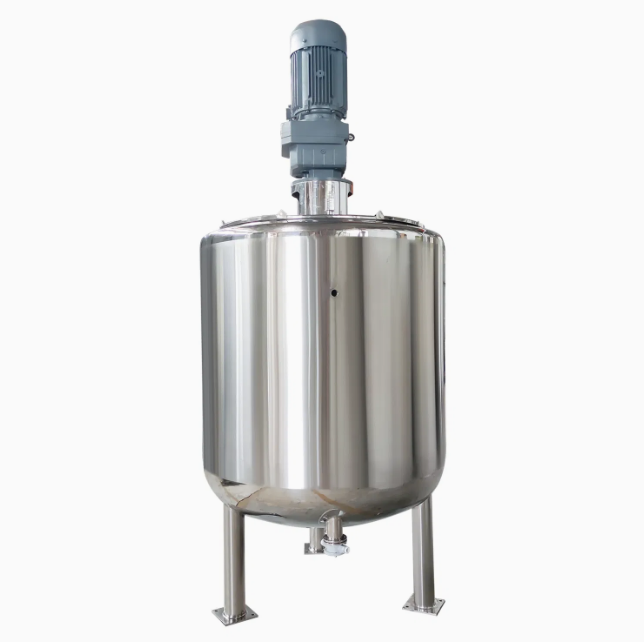
Heat alone will not guarantee a successful process. You must analyze agitation compatibility carefully during the design phase. Matching the impeller design to the material's behavior under heat is absolutely crucial. The wrong agitator will leave cold spots, burn the product, or destroy delicate ingredients. Here are the most common mixing frameworks used in thermal vessels:
Anchor Agitators with Teflon Scrapers: High-viscosity products demand specialized equipment. An anchor agitator sweeps the entire inner diameter of the vessel. We equip these anchors with flexible Teflon scrapers. The scrapers physically wipe the heated tank wall during every rotation. This wiping action prevents localized burning on the heat transfer surface. It immediately pushes the heated material into the center of the batch. This setup is essential for dense pastes, heavy creams, and thick gels.
High-Shear Dispersers: Some processes require aggressive mechanical action alongside heat. You use high-shear dispersers when melting solids into liquids rapidly. The fast-spinning rotor-stator head creates intense hydraulic shear. This focuses on aggressive particle size reduction. As the jacket warms the solid ingredients, the disperser breaks them apart mechanically. This rapid breakdown ensures quick dissolution and flawlessly smooth textures.
Propeller / Turbine Mixers: Not all products are thick and difficult to move. Propeller mixers are ideal for low-viscosity, water-like fluids. In these liquid applications, your primary goal is maintaining a gentle, consistent holding temperature. The turbine creates steady axial or radial flow patterns. This continuous turnover prevents thermal stratification without overworking or damaging the fluid.
Procuring the correct vessel requires a highly methodical evaluation. You cannot simply order a standard tank and expect optimal results. You must scrutinize several technical dimensions to ensure complete process compatibility. Making informed decisions here prevents catastrophic failures during production.
Selecting the right metallurgy is your very first critical decision. You must justify the choice between standard and premium stainless steel alloys based on your product chemistry.
304 Stainless Steel: This remains the standard for general chemical and basic food applications. It offers excellent durability, structural integrity, and basic corrosion resistance.
316L Stainless Steel: This upgraded alloy includes molybdenum for enhanced protection. It is absolutely essential for high-salinity environments, corrosive chemicals, and pharmaceuticals. The "L" denotes a low carbon content, which actively prevents weld decay during manufacturing.
You must calculate your actual production needs accurately. The working volume of a tank is typically 80% of its total total capacity. This vital headspace prevents dangerous overflow during vigorous agitation or thermal fluid expansion. Importantly, this working volume dictates your specific heating surface area requirements. If you under-fill a jacketed tank, you expose the product to dry heat above the liquid line. This burns the material instantly and ruins the entire batch. Always match your batch size directly to the correct wetted jacket area.
Modern manufacturing relies heavily on repeatable automation. Your vessel needs integrated Programmable Logic Controllers (PLCs) to manage the entire cycle. You should pair these controllers with highly accurate RTD temperature probes. These probes monitor the internal batch temperature in real-time, feeding data back to the heating element. Furthermore, Variable Frequency Drives (VFDs) allow you to adjust the agitator speed precisely as the product thins out. These automated tools ensure repeatable, flawless recipe management across every operational shift.
You must assess vendor transparency regarding strict industry certifications. Operating pressurized heating jackets carries inherent safety risks. Evaluating these certifications ensures you remain legally compliant and operationally safe.
ASME Certification: Required whenever vessels handle internal or external pressure safely, especially when using steam jackets.
3-A SSI Standards: Essential for sanitary food processing. These design standards ensure complete cleanability and prevent bacterial growth in crevices.
cGMP Compliance: Mandatory for pharmaceutical manufacturing. It ensures proper material traceability, smooth weld finishes, and rigorous quality tracking.
Even the highest quality equipment can fail during deployment if installed poorly. You must anticipate implementation realities and mitigate technical risks early in the planning phase. Overlooking these critical factors leads directly to unscheduled downtime and ruined product batches.
Hygiene remains non-negotiable in food and pharmaceutical processing environments. The tank must drain completely between separate batches. We achieve this by specifying conical or heavily dished tank bottoms. Flat bottoms trap product and severely hinder drainage. Furthermore, you must position Clean-in-Place (CIP) spray balls strategically. The chemical spray must clean underneath complex agitator blades and behind baffles without blind spots. A proper CIP system removes manual cleaning intervention, keeping your operators safe and your process sterile.
Industrial metals expand and contract rapidly when exposed to drastic temperature changes. Thermal shock occurs when you introduce freezing cold products into highly pre-heated jackets, or vice versa. This rapid temperature swing can easily crack internal welds or warp the vessel geometry. You must design automated ramp-up and cool-down sequences. The control system should gradually step the jacket temperature to match the product safely. This careful moderation protects the vessel integrity and prolongs the equipment lifespan dramatically.
Heating a large steel vessel requires massive energy inputs. You cannot afford to let that expensive heat radiate into the factory floor. Proper external insulation cladding is an absolute necessity. High-density insulation traps the thermal energy tightly against the inner tank wall. This significantly reduces energy waste during long, sustained holding cycles. More importantly, the cladding keeps the outer stainless steel shell cool to the touch. This vital feature protects your operators from accidental burns while they work closely near the equipment.
A heating mixing tank acts as much more than a simple storage vessel. It functions as an active thermal processing machine that dictates your overall batch yield, final product quality, and facility energy efficiency. Selecting the right specifications is crucial for long-term operational success. To ensure a smooth deployment, keep the following action steps in mind:
Audit your facility's current utilities immediately to determine if you have sufficient steam or electrical capacity before making a selection.
Run a comprehensive viscosity profile of your product across various temperature stages to ensure you select the correct agitator style.
Map out your exact regulatory requirements, such as ASME pressure codes or 3-A sanitary guidelines, to prevent compliance failures during installation.
Prioritize operator safety and energy efficiency by investing in fully automated control panels and robust external tank insulation.
Taking these proactive steps will streamline your procurement process significantly. You will secure a reliable machine perfectly tuned to your unique operational demands.
A: Yes. Tanks equipped with dimple jackets or half-pipe coil jackets can alternate between heating media, like steam or hot water, and cooling media, such as chilled water or glycol. The automated control system must carefully manage this fluid transition to prevent dangerous thermal shock to the vessel.
A: Single-wall tanks have only one layer of metal and rely on ambient room temperatures or external immersion heaters, which can easily burn localized product. Jacketed tanks feature a secondary outer wall. This outer cavity circulates heating media, ensuring even, indirect thermal transfer without scorching the batch.
A: If your manufacturing process requires heating materials above their natural boiling point, pressure builds internally. Additionally, if you are circulating high-pressure steam within the jacket space, the vessel must be officially ASME-certified. This certification guarantees the structural integrity to handle internal or external pressure safely.