Please Choose Your Language


Views: 0 Author: Site Editor Publish Time: 2026-04-27 Origin: Site


Process engineers and plant managers constantly seek reliable ways to resolve batch inconsistency on the production floor. You likely want to reduce lengthy processing times while seamlessly scaling temperature-sensitive manufacturing operations. Processing high-viscosity materials requires precise synchronization. You must carefully balance thermal transfer dynamics alongside complex fluid movement. Triggering specific chemical reactions demands this exact same rigorous control. Segregated heating and mixing processes frequently lead to severe product degradation. They also cause excessive energy consumption and create major workflow bottlenecks in your facility. You need an integrated approach to solve these manufacturing hurdles. This article provides an evidence-based breakdown of the operational benefits you gain from consolidating these critical steps. We explore how advanced thermal equipment improves your production outcomes. Finally, we provide a rigorous technical evaluation framework. You will learn exactly how to procure the right system for your specific application requirements.
Efficiency: Consolidating thermal and mechanical processing reduces batch times by up to 30% while eliminating intermediate transfer steps.
Quality Control: Precise temperature regulation prevents material solidification, controls viscosity, and ensures homogenous distribution of active ingredients.
Configuration Dependency: Maximizing ROI requires matching specific jacket designs (Dimple, Half-pipe) and agitator types (Anchor, Turbine) to fluid rheology.
Lifecycle Costs: Upfront procurement must account for compliance standards (ASME, FDA) and cleaning realities (CIP vs. COP) to mitigate long-term maintenance overhead.
Chemical manufacturing and active pharmaceutical ingredient (API) blending require sustained thermal stability. Simultaneous agitation and heating maintain the specific activation energy necessary for these reactions. When you agitate a mixture while applying heat, the reaction occurs much faster. You avoid the temperature drops commonly seen during fluid transfers. This integrated thermal approach directly accelerates reaction times and boosts overall facility throughput.
Viscosity management remains crucial for food, beverage, and cosmetics production. Pastes, waxes, and syrups solidify rapidly if temperatures fall below critical thresholds. Maintaining these thick materials at specific thermal setpoints ensures continuous flowability. You prevent expensive pipe blockages downstream. A high-quality Heating Mixing Tank offers precise thermal regulation. This keeps your dense formulations perfectly homogenous during every phase of production.
Direct conduction and convection within a single vessel minimize ambient heat loss. Multi-stage processing systems waste significant energy when moving materials between separate heating kettles and blending units. Consolidating these actions into one unit optimizes your energy consumption. The enclosed thermal environment traps heat efficiently. This reduces the heavy utility loads typically required to maintain continuous processing temperatures.
Industrial floor space commands a high premium. Consolidating drying, melting, and blending into one infrastructure footprint optimizes your facility layout. You immediately reduce the required piping, transfer pumps, and intermediate holding valves. Eliminating these redundant components lowers your initial installation complexity. It also frees up valuable square footage for other critical manufacturing operations.
Evaluators must match the vessel's thermal transfer mechanism to their facility's pressure capabilities. You must also consider your available heating media, whether you use steam, hot water, or thermal oil. Selecting the correct jacket ensures efficient heat transfer and prevents structural failures.
Dimple jackets work best for medium-to-low pressure applications. Engineers weld a thin, dimpled outer shell to the main vessel wall. The unique dimple pattern creates forced turbulence in the heating media as it flows. This turbulence significantly improves heat transfer efficiency. It breaks up boundary layers inside the jacket. Furthermore, this design allows manufacturers to utilize thinner vessel walls. The result is a highly cost-effective thermal solution for standard processing needs.
Heavy chemical synthesis often involves extreme conditions. Half-pipe coil jackets are necessary for high-pressure and high-temperature industrial fluid applications. Manufacturers weld a continuous half-pipe spiraling around the vessel exterior. This configuration provides exceptional structural rigidity. It easily handles aggressive steam pressures without requiring excessively thick inner tank walls. It also allows for sectionalized temperature control. You can run different heating media through distinct zones of the vessel.
Conventional jackets feature a standard double-wall construction. They provide low-pressure, highly uniform heat distribution across the entire wetted surface. This design acts like a large thermal blanket around the inner chamber. It remains best suited for smaller batch volumes. Conventional jackets excel in applications where complex internal flow patterns aren't required. However, they demand thicker metal construction if subjected to high internal pressures.
Jacket Design | Ideal Pressure Range | Optimal Heating Media | Key Engineering Advantage |
|---|---|---|---|
Dimple Jacket | Medium to Low | Hot Water, Low-Pressure Steam | High turbulence, cost-effective wall thickness |
Half-Pipe Coil | High Pressure | High-Pressure Steam, Thermal Oil | Superior structural rigidity, zoned heating |
Conventional | Low Pressure | Hot Water, Chilled Glycol | Uniform heat distribution for small batches |
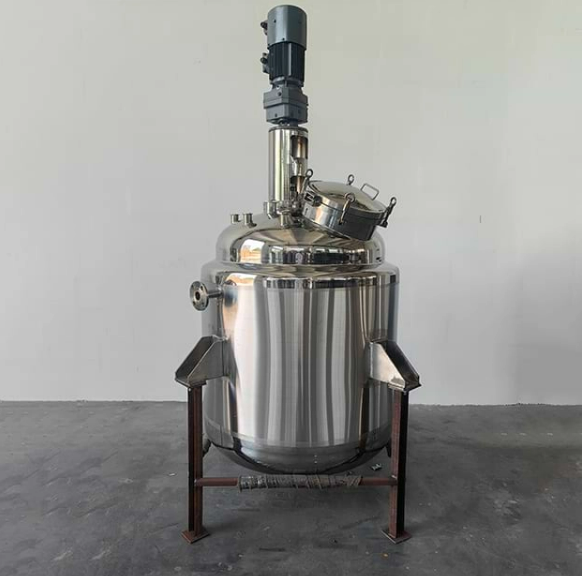
Heating viscous fluids without proper agitation causes severe localized hot spots. These hot spots lead directly to material degradation, known in the industry as "burn-on." Burn-on destroys product batches and damages internal vessel finishes. You must pair your thermal systems with appropriate mechanical agitation.
Scrape-Surface (Anchor) Agitators: These mechanisms are absolutely essential for highly viscous materials. Think of heavy mud, dense sauces, and cosmetic pastes. Anchor agitators sweep closely along the inner vessel contour. They utilize hinged Teflon or PEEK scrapers. These scrapers physically remove stagnant material from the heated tank wall during rotation. This action ensures continuous, even thermal exchange. It successfully prevents fouling and stops product from baking onto the steel.
Turbine and High-Shear Impellers: Low-viscosity fluids demand entirely different fluid dynamics. Turbine impellers work best for liquids needing rapid dispersion. They excel at dissolving stubborn powders into hot syrups. High-shear impellers operate at elevated speeds. They physically tear agglomerated particles apart. This rapid movement distributes heat instantly throughout the liquid matrix. It prevents powders from clumping near the thermal surfaces.
The Role of Baffles: Internal stationary plates, called baffles, disrupt circular fluid rotation. Without baffles, rapid agitation simply spins the liquid in a solid mass. This creates a deep vortex and leaves unmixed "dead zones" near the heating surface. Baffles force the fluid to cascade back into the center of the mixing vortex. They promote top-to-bottom turnover. This ensures every molecule receives equal thermal exposure.
Demonstrating implementation realities separates theoretical design from profitable manufacturing. Any industrial equipment is only profitable if your team can safely and efficiently maintain it. Securing a compliant heating and mixing tank ensures you meet strict regulatory demands.
Clean-in-Place (CIP) systems represent the industry standard for automated facilities. They require a high upfront capital cost but guarantee minimal operational downtime. CIP is ideal for automated lines processing food, beverages, or pharmaceuticals. The tank requires specific internal geometries. Engineers must eliminate all dead legs and install specialized flush valves. Spray balls permanently mount inside the dome to deliver high-impact cleaning chemicals automatically.
Clean-Out-of-Place (COP) setups require lower initial capital expenditure. However, they remain highly labor-intensive. COP suits processes utilizing complex agitator setups. It also fits facilities running highly cross-contaminated batches. Operators must execute manual teardowns between production runs. They remove impellers, unbolt flanges, and scrub components in separate wash stations. You must weigh these labor demands against your production schedule.
Corrosion resistance at elevated temperatures is non-negotiable. Industry standards require 316L stainless steel for all wetted and heated parts. Standard 304 stainless steel degrades quickly when exposed to hot, acidic, or saline mixtures.
Compliance verification dictates your procurement choices. Facilities utilizing pressurized heating media must mandate ASME certification for their jackets. Food and beverage operators require FDA or 3-A sanitary design approvals. Chemical plants handling volatile solvents must secure ATEX-certified motors and explosion-proof electrical panels. Overlooking these regulatory standards invites immediate facility shutdowns.
Navigating the decision stage requires a disciplined checklist. Evaluating OEM proposals carefully helps you avoid expensive specification mismatches.
Capacity vs. Scalability: Never confuse total vessel volume with operational capacity. You must evaluate the working volume, which typically represents 70-80% of the total internal volume. If you fill a vessel to 100%, agitation will cause immediate overflow. Match this actual working volume against your projected production scales.
Orientation and Footprint: Select your agitator mounting orientation based on facility constraints. Top-Entry mixers are versatile and handle high-shear applications beautifully. Bottom-Entry mixers are ideal for high-viscosity emulsions. They also provide better heat transfer at the base of the unit. Side-Entry mixers suit massive fluid volumes where facility height restrictions prohibit top-mounted motors.
Troubleshooting & Reliability Check: Ensure the vendor specifically addresses common operational pain points. Ask how they prevent uneven temperature distribution. Request specific flow controls for the jacket media. High-viscosity mixes frequently clog internal temperature probes. Ask for flush-mounted sensor designs. Finally, inquire about jacket pipe leaks. Demand documented annealed foil inspections during the vessel's fabrication phase.
Sensor Integration: Modern batch tracking requires extensive data. Assess the vendor's provisions for continuous process monitoring. You need strategically placed temperature probes that touch the product, not just the heated wall. Evaluate options for integrating pH sensors, load cells, and automated emergency shut-offs. Seamless sensor integration guarantees reliable, repeatable batches.
A correctly specified heating mixing tank drastically improves your manufacturing floor. It transitions a facility from reactive batch management to precise, reproducible process control. You eliminate intermediate transfer steps, protect temperature-sensitive ingredients, and streamline your facility's footprint.
Before requesting OEM quotes, conduct a thorough rheological assessment of your materials at your target temperatures. Documenting exact viscosity changes prevents severe under-sizing of agitator motors. We strongly advise buyers to request physical material test runs from tank manufacturers. If physical testing proves difficult, demand Computational Fluid Dynamics (CFD) modeling. These steps guarantee your new equipment perfectly matches your fluid dynamics and thermal demands.
A: A conventional jacket uses a solid double-wall construction, offering uniform heat but requiring thicker steel for high pressures. A dimple jacket features a thin, dimpled outer shell. The dimples create fluid turbulence, increasing heat transfer efficiency. Dimple jackets weigh less and cost less to manufacture but are restricted to medium or low-pressure media.
A: Yes. You can alternate the media flowing through the thermal jacket. By circulating chilled water or glycol instead of steam or hot oil, the vessel functions as a highly effective cooler. This dual functionality is widely used in food processing to cook and immediately chill sauces in one unit.
A: You must utilize scrape-surface agitators. These mechanisms feature Teflon or PEEK blades that physically scrape the inner tank walls as they rotate. Combined with optimized, slow impeller speeds, this continuous scraping prevents dense materials from stagnating, overheating, and baking onto the hot metal.
A: You must provide your product's starting and final viscosity, density, and target processing temperature. Specify your preferred heating media, required batch size, and available facility utilities. Lastly, state all necessary industry compliance requirements, such as ASME, 3-A, FDA, or ATEX certifications.