Please Choose Your Language


Views: 0 Author: Site Editor Publish Time: 2026-04-24 Origin: Site


Processing temperature-sensitive formulations demands exact thermal control alongside simultaneous agitation. When manufacturers separate these two steps, cycle times inevitably increase. This separation risks ingredient degradation. It also makes maintaining a stable product viscosity highly difficult.
Investing in an integrated Heating Mixing Tank resolves these exact challenges. It cleverly merges thermal transfer and dynamic blending into one highly controlled environment. You eliminate redundant material transfer steps. You also safeguard fragile chemical bonds.
This comprehensive guide looks far beyond basic equipment definitions. We deliver a practical, engineering-focused framework designed for plant managers and engineers. You will learn exactly how to evaluate, size, and specify your ideal system for complex industrial, chemical, or sanitary applications. Let us dive into the core mechanics.
Integrating heating and agitation in one vessel reduces material handling steps and ensures consistent product viscosity.
The choice of heating medium (steam, electric, thermal oil) depends heavily on existing facility infrastructure and desired ramp-up times.
Jacket configurations (conventional, dimple, half-pipe coil) must be matched to internal vessel pressure and "Delta T" (temperature differential) requirements.
Sanitary compliance dictates specific manufacturing standards, such as Ra 0.4 micrometer finishes, 100% sanitary welds, and Clean-in-Place (CIP) compatibility.
Accurate equipment specification requires defining batch sizes, peak viscosity at temperature, and discharge flow realities.
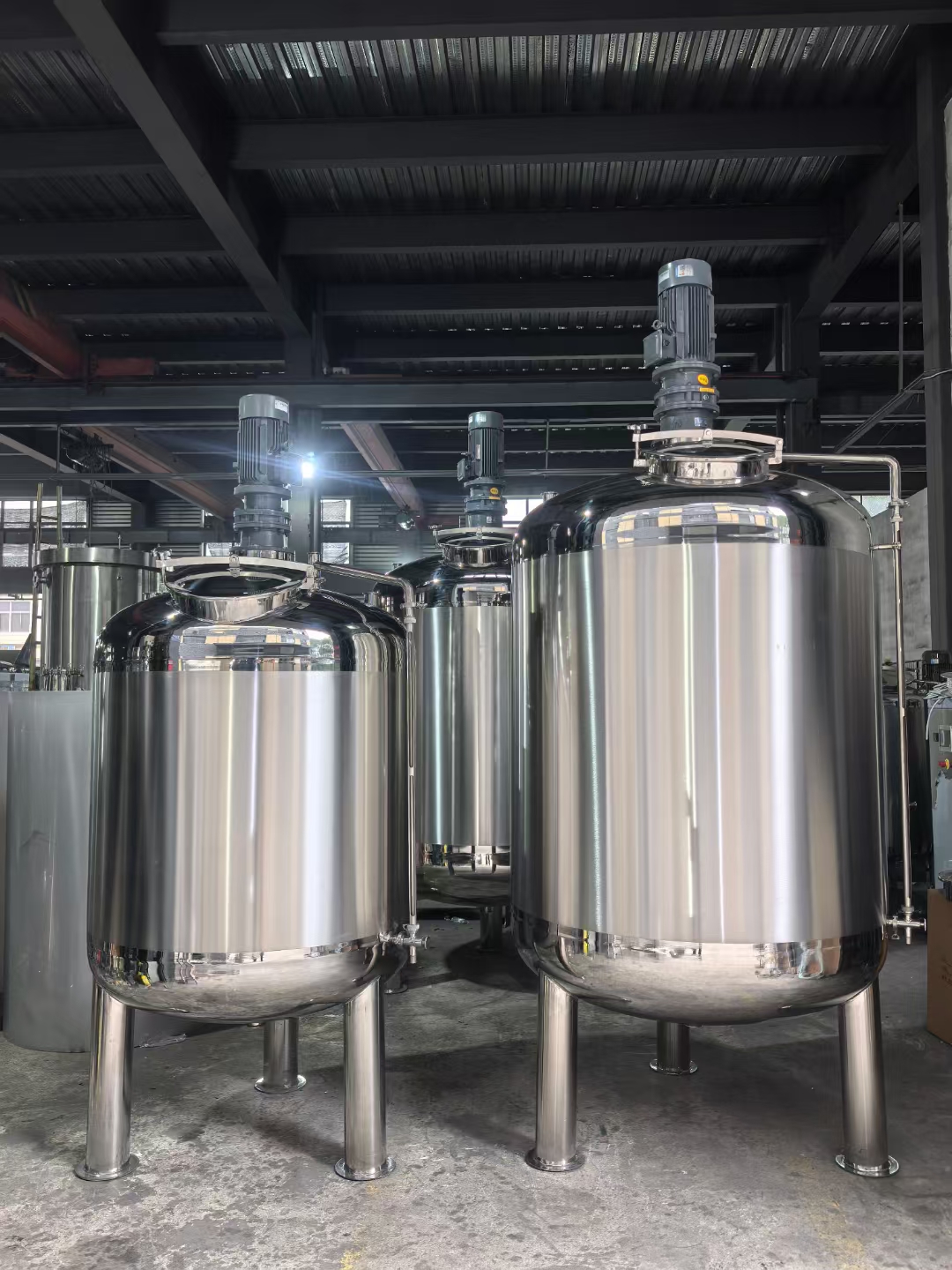
Combining thermal control and variable-speed agitation creates impressive integrated system efficiency. This pairing achieves efficient dissolution rapidly. It thoroughly prevents material separation during critical production phases. When you heat a liquid while stirring it, you maintain a uniform temperature gradient. This eliminates localized cold spots.
Engineers primarily evaluate 304 and 316L stainless steel for vessel fabrication. Your choice depends heavily on product chemistry. Standard 304 stainless steel offers excellent general corrosion resistance. It suits basic food processing applications perfectly. However, 316L stainless steel contains molybdenum. This addition provides superior resistance to chlorides and harsh industrial acids.
Vessel geometry also dictates overall success. Consider these bottom configurations:
Flat bottoms: Economical but prone to pooling.
Sloped bottoms: Improve drainage for low-viscosity fluids.
Conical bottoms: Ideal for heavy slurries requiring complete gravity discharge.
Dished bottoms: Excellent for handling high internal pressures seamlessly.
Thermal loss ruins energy efficiency. Manufacturers apply robust insulation materials to combat this. Glass blanket or expanded perlite insulation wraps the primary vessel tightly. It traps heat efficiently. Plant safety regulations also mandate specific exterior constraints. When internal temperatures exceed 65°C, insulating sheaths become a critical health and safety (H&S) requirement. These sheaths prevent severe operator burns.
Modern production cannot rely on manual guesswork. We integrate digital sensors directly into the vessel walls. These provide real-time temperature feedback. Automated temperature regulation adjusts the heat input instantly. Today, IoT-enabled central control units track every variable. They minimize human error. They also ensure absolute batch-to-batch repeatability.
Selecting the right heating method for your heating and mixing tank transforms your production efficiency. Each medium carries unique advantages and specific infrastructure demands.
Electric heating relies on submersible electric elements or external multiple-circuit blanket heaters. It delivers highly exact temperature control. The system remains highly compact. You do not need an external boiler room. Furthermore, it offers enhanced safety via strict electrical isolation.
However, you must acknowledge the risks. Electric heating generally yields higher operational energy costs compared to steam. To protect fragile components, design details matter immensely. You must specify a low watt-density distribution. Aim for approximately 5 watts per square inch. This completely eliminates dangerous "hot spots" and prevents localized scorching.
Steam heating injects pressurized steam directly into the vessel jacket. This mechanism delivers incredibly rapid heat-up times. It provides exceptionally high thermal efficiency for large-scale operations. Yet, steam presents distinct challenges. It requires significant facility infrastructure. You must maintain high-pressure boilers, complex piping, and specialized safety blow-off valves.
The jacket dictates how heat enters your product. We must match the jacket style to your internal pressure needs.
Jacket Type | Best Applications | Key Limitations |
|---|---|---|
Conventional Jackets | Vessels under 300 gallons. Scenarios where internal pressure strictly exceeds jacket pressure. | Requires thicker inner vessel walls for larger tanks. |
Dimple Jackets | Lightweight, cost-effective solutions for moderate pressures. | Not recommended for processes requiring extreme or rapid thermal shock. |
Half-Pipe Coil | High-temperature processes. Highly efficient liquid heat transfer. | More expensive to fabricate due to continuous welding requirements. |
Proper agitation prevents heat from stagnating. It pushes cooler fluid against the warm jacket walls continuously. You must select the right impeller to match your exact fluid dynamics.
You can choose from several mixing forms. Paddle and turbine impellers work well for water-like liquids. Anchor and frame agitators scrape the vessel walls directly. They prevent thick syrups from burning against the heated metal. Dispersed disc mixers excel at breaking down stubborn powders.
Complex emulsions often demand upgrades. You might need high-shear mixers. Sometimes, a combined top-entry and bottom-entry configuration works best. This dual approach pulverizes solid ingredients while simultaneously sweeping the vessel floor.
Engineers frequently overlook the discharge phase. A hidden risk involves material solidifying at the outlet. The tank itself remains hot, but the bottom valve turns cold. Thick lotions or waxes easily clog this unheated bottleneck.
We solve this using smart engineering solutions. You should specify electrically heated and thermostatically controlled wheel-type gate valves. These specialized valves prevent cold spots during discharge. They keep the material flowing smoothly until the vessel empties entirely.
Most facilities utilize standard batch processing. However, continuous manufacturing gains popularity daily. To support continuous flow, manufacturers install inline heating elements. They also utilize optimized top-entry designs. These modifications allow fresh material to enter and exit without mandatory shutdown cycles.
Sanitary applications demand uncompromising cleanliness. A microscopic flaw can ruin an entire production run. The pharmaceutical and food & beverage industries enforce rigorous standards to ensure consumer safety.
The interior surface must remain flawlessly smooth. Industry regulations mandate strict surface roughness standards. Engineers measure this as Ra (Roughness Average). A finish of Ra 0.4 micrometers removes all microscopic pits. This extreme smoothness eliminates bacterial harbor points entirely. Pathogens simply cannot cling to the metal.
Seams represent the greatest contamination risk. The necessity of 100% sanitary interior welds cannot be overstated. Welders grind and polish every internal joint until it blends perfectly into the surrounding steel. Additionally, systems require integrated Clean-in-Place (CIP) or Sterilize-in-Place (SIP) systems. These automated cleaning loops flush the tank rapidly. They allow for fast, safe product changeovers without manual scrubbing.
You must ensure your manufacturer adheres to recognized engineering codes. Look for ASME Section VIII compliance for pressurized vessels. 3A Dairy standards signify top-tier sanitary construction. CSA B51 regulates boilers and pressure vessels safely. Reputable vendors always provide full material traceability. They supply documentation proving the exact origin of the steel used.
Buying generic equipment often leads to catastrophic process failures. You must specify your requirements meticulously. A structured procurement framework prevents expensive mistakes.
You must calculate the required temperature differential. Engineers call this the "Delta T". It represents the difference between your starting temperature and your target temperature. Knowing your Delta T helps correctly size the heating elements. It determines the necessary insulation thickness. It also defines your future cooling capacity needs.
Never guess your product's behavior at scale. Testing product prototypes with the manufacturer holds immense importance. Bench-scale tests determine accurate torque requirements for the motors. They also map out realistic heating ramp rates. Viscosity changes dramatically as temperature rises. You must witness this firsthand.
Do not accept delivery blindly. Rigorous pre-shipment calibration tests serve as a non-negotiable benchmark. We highly recommend a minimum 12-hour continuous load testing protocol. This verifies motor durability. It confirms thermal stability. It ultimately proves vendor trustworthiness.
Provide vendors with a comprehensive checklist to ensure an accurate quote. Gather the following data before making your inquiry:
Exact product viscosity range: Detail the changes at room temperature versus heated states.
Batch volume: Specify both minimum and maximum fill levels.
Target temperature ranges: Note your required heat-up speed.
Heating medium availability: Confirm if you have existing steam, thermal oil, or adequate electrical amperage.
Automation requirements: Define your need for touchscreens, data logging, or simple manual dials.
A highly engineered heating and mixing vessel acts as the heartbeat of your production line. It is definitely not a generic commodity. It functions as a highly customized process engine.
To summarize the core lessons from this guide:
Choosing the wrong heating medium or jacket type directly leads to product degradation or exorbitant energy costs.
Matching impeller designs to your fluid dynamics prevents localized scorching.
Sanitary standards, such as Ra 0.4 finishes and CIP integration, protect your brand from dangerous contamination.
Insulating sheaths and heated discharge valves represent critical investments for both safety and flow efficiency.
As a next step, advise your maintenance team to audit your facility's existing utility infrastructure. Determine your steam versus electrical capabilities clearly. Once you understand your power limits, consult with specialized engineering teams. They will help you map out a custom specification based exactly on your precise fluid dynamics.
A: You must provide your exact batch size and target temperature range. We also need your product viscosity at different temperatures. Note your preferred heating method (steam, electric, or oil). Finally, specify any facility dimensional constraints, such as ceiling heights or doorway widths.
A: These units boast exceptional longevity. Heavy-duty 304 or 316L stainless steel tanks often last decades. Proper maintenance dramatically extends their lifespan. Routine CIP cycles and scheduled seal replacements keep the equipment running perfectly for 15 to 20 years.
A: Yes, many units offer dual capabilities. Dual-control jacketed systems accept both hot and cold fluids. You can circulate chilled water, glycol, or phase-change fluids through the same jacket. This enables rapid temperature cycling for complex recipes.
A: Yes, provided they feature the correct safety ratings. Manufacturers can supply explosion-proof motor classifications. They also implement strict intrinsic safety limits on all electrical panels. You must specify your facility's specific hazard classification during the quoting process.