Please Choose Your Language


Views: 0 Author: Site Editor Publish Time: 2026-04-02 Origin: Site


Temperature control in mixing tanks is one of the most critical factors influencing industrial process efficiency, product quality, and operational safety. Whether in chemical manufacturing, food and beverage processing, pharmaceuticals, or specialty materials production, maintaining precise temperature throughout the mixing process ensures consistency, prevents degradation of sensitive ingredients, and enables controlled chemical reactions. Without effective temperature management, industries face risks such as uneven product quality, extended processing times, reduced yields, and potential safety hazards.
Mixing tanks are designed not only to combine ingredients but also to maintain optimal process conditions. While agitation ensures homogeneity, temperature control ensures that the physical and chemical properties of the mixture remain consistent. This becomes particularly vital when working with heat-sensitive compounds, reactive chemicals, or viscous materials. For these reasons, understanding the importance of temperature control and how it is integrated into mixing tank systems is essential for engineers, operators, and production managers.
Many industrial processes rely on chemical reactions that are highly temperature-dependent. Reaction rates often increase with temperature, while inadequate control can slow reactions or create unwanted byproducts. In pharmaceutical production, precise temperature control ensures that active compounds remain effective and stable. Similarly, in chemical manufacturing, maintaining a specific temperature range ensures consistent product quality and reduces waste caused by incomplete or inconsistent reactions.
For industries producing emulsions, suspensions, or delicate mixtures, temperature consistency is essential. Variations in temperature can lead to separation, changes in viscosity, or undesirable crystallization. In food and beverage production, temperature deviations can affect flavor, texture, and nutritional content, while in cosmetics, improper temperatures may alter consistency, color, or stability. Effective temperature management ensures that each batch meets predetermined quality standards.
Temperature directly affects the viscosity of many liquids and semi-solids. Higher temperatures often reduce viscosity, improving flow and mixing efficiency, whereas lower temperatures increase viscosity, making agitation more challenging and potentially leading to incomplete blending. Maintaining the correct temperature ensures that materials mix uniformly and reduces the mechanical stress on mixers and agitators.
Certain ingredients, particularly in pharmaceuticals, specialty chemicals, and cosmetics, are heat-sensitive. Exceeding their optimal temperature can cause degradation, loss of potency, or unwanted chemical changes. Temperature control systems in mixing tanks protect sensitive compounds by preventing overheating and ensuring that reactions occur under controlled, safe conditions.
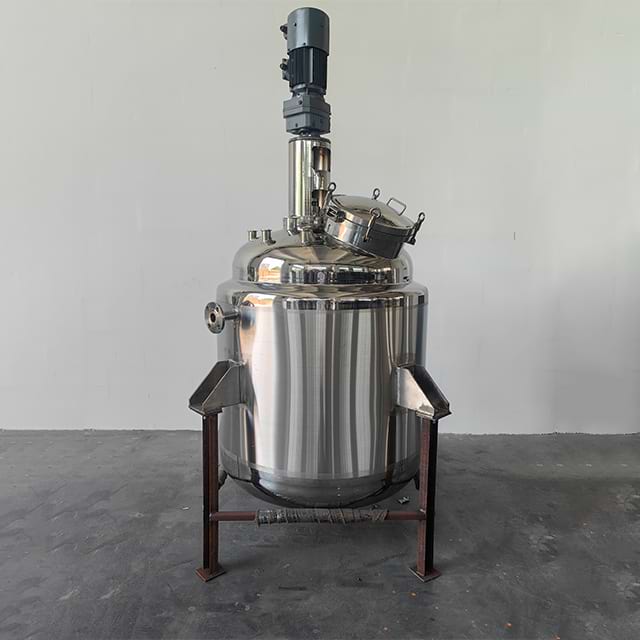
Jacketed mixing tanks are equipped with an outer shell through which heating or cooling fluids circulate. Steam, water, or oil is commonly used to transfer heat efficiently to the tank contents. Jacketed vessels allow precise temperature adjustments and are widely used in chemical, food, and pharmaceutical industries. They are particularly effective for processes requiring rapid heating or cooling without exposing the mixture to direct heat, which could degrade sensitive ingredients.
Some mixing tanks incorporate internal coils or heat exchangers. These devices provide additional temperature control by circulating fluids directly within the tank, ensuring uniform heat distribution and preventing localized hot or cold spots. Internal coils are often used for viscous materials or high-volume batches, where uniform heating or cooling is critical for consistent results.
Modern mixing tanks often include advanced sensors and automated control systems. Thermocouples, RTDs, and infrared sensors provide real-time monitoring, while programmable logic controllers (PLCs) adjust heating or cooling systems automatically. Automated control enables precise maintenance of temperature within narrow ranges, reducing human error, improving repeatability, and enhancing overall process efficiency.
Proper insulation is essential to maintain stable temperatures in mixing tanks. Insulated tanks minimize heat loss or gain from the external environment, ensuring energy-efficient operation and consistent process conditions. Insulation also reduces the load on heating or cooling systems, lowering operating costs and extending equipment life.
In chemical industries, reactions are often sensitive to temperature fluctuations. Controlling temperature ensures that reactions proceed at the intended rate and that byproducts are minimized. Temperature deviations can compromise product purity, yield, and safety. Mixing tanks with precise heating and cooling capabilities are essential for process optimization and regulatory compliance.
Temperature control is vital in food and beverage processing, where ingredients can be sensitive to heat or cooling. Dairy products, sauces, beverages, and confections require consistent temperatures to maintain flavor, texture, and nutritional quality. Controlled heating and cooling during mixing prevents spoilage, uneven consistency, and microbial growth, supporting both product safety and consumer satisfaction.
In pharmaceutical and biotechnology applications, temperature control is essential for maintaining the stability and efficacy of active ingredients. Many formulations require precise temperature ranges for dissolution, blending, and chemical reactions. Even slight deviations can result in loss of potency or compromised safety. Temperature-controlled mixing tanks ensure that formulations meet rigorous regulatory and quality standards.
High-quality cosmetic products, adhesives, and specialty materials often rely on temperature-sensitive ingredients to achieve desired texture, stability, and performance. Mixing tanks with precise thermal management prevent degradation, maintain homogeneity, and ensure that the final product performs consistently. Temperature control is particularly important during emulsification, when improper heat can result in separation or unstable formulations.
Mixing tanks used in wastewater treatment or environmental processing benefit from temperature control as well. Maintaining optimal temperatures can enhance chemical treatment efficiency, biological reaction rates, and overall process consistency. Proper thermal management supports reliable, cost-effective operation in industrial and municipal facilities.
The choice of materials for the tank body, jacket, or coils must consider thermal conductivity, chemical compatibility, and durability. Stainless steel is common in food, pharmaceutical, and cosmetic applications due to its corrosion resistance and hygienic properties. Carbon steel or specialized alloys are often used in chemical manufacturing where higher strength or chemical resistance is required. The design should allow for uniform heat distribution to prevent hot or cold spots, which can affect product quality.
Selecting the appropriate heating and cooling method depends on the materials being processed and process requirements. Steam jackets, electric heating elements, and circulating fluids offer different advantages in terms of speed, efficiency, and control. Cooling systems, often involving chilled water, glycol, or refrigeration circuits, prevent overheating and allow precise temperature maintenance during exothermic reactions.
The agitation system must be designed to complement temperature control. Uniform mixing enhances heat transfer and ensures that all materials reach the target temperature consistently. Impeller selection, speed, and placement affect both mixing efficiency and temperature uniformity, making integrated system design critical for optimal performance.
Automated temperature monitoring and control reduce the risk of human error and enhance reproducibility. Sensors provide real-time feedback, while control systems adjust heating or cooling dynamically. Automated alarms and interlocks prevent excursions outside acceptable ranges, protecting both products and operators.
Industries with strict regulatory standards, such as food, beverage, and pharmaceuticals, require mixing tanks that provide documented temperature control capabilities. Tanks must meet safety codes, hygiene standards, and operational guidelines, ensuring both legal compliance and product integrity.
Operating mixing tanks without effective temperature control can create numerous issues. Inconsistent heat distribution can cause uneven mixing, incomplete reactions, or product degradation. Overheating can damage sensitive ingredients, while insufficient heating can slow chemical reactions or prevent proper dissolution. Energy inefficiencies may arise if heating or cooling systems are not properly designed or maintained. Addressing these challenges requires careful design, regular maintenance, and the selection of reliable temperature control technologies.
Temperature control is a fundamental aspect of mixing tank operation, directly affecting process efficiency, product quality, and operational safety. Understanding the interplay between vessel design, heating or cooling systems, agitation, and automation is essential for achieving consistent and reliable outcomes across industries. Companies that invest in temperature-controlled mixing tanks not only optimize production but also reduce energy consumption, prevent product loss, and comply with stringent regulatory standards. For manufacturers seeking expert solutions, Wenzhou Tianxu Machinery Technology Co., Ltd. offers high-quality, reliable mixing tanks with advanced temperature control capabilities. Engaging with an experienced partner ensures equipment tailored to specific industrial needs, backed by technical expertise and long-term support, enabling safe, efficient, and consistent operations.
Q: Why is temperature control important in a mixing tank?
A: Temperature control ensures uniform mixing, prevents degradation of sensitive ingredients, and allows chemical reactions to proceed efficiently.
Q: How is temperature controlled in mixing tanks?
A: Methods include jacketed vessels, internal coils, circulating heating or cooling fluids, and automated monitoring systems for precise control.
Q: Can poor temperature control affect product quality?
A: Yes, inadequate temperature management can lead to uneven mixing, separation, loss of potency, or product instability.
Q: What industries benefit most from temperature-controlled mixing tanks?
A: Chemical manufacturing, food and beverage, pharmaceuticals, cosmetics, and environmental applications all rely on precise thermal management to ensure consistent results.