Please Choose Your Language


Views: 0 Author: Site Editor Publish Time: 2026-05-15 Origin: Site


In food processing, biopharma, and cosmetics, standard industrial pumps introduce unacceptable risks. They cause contamination, product degradation, and severe compliance failures. The operational stakes are extremely high. You need a solution built specifically for purity and hygiene. A Sanitary Pump serves as a strictly regulated, precision-engineered necessity. Facilities rely on them daily. They transport consumables and highly sensitive biological materials safely. We will guide you through this critical equipment evaluation process.
Moving beyond basic definitions, we will examine the technical criteria you must understand. You will learn how to match pump mechanics to specific fluid properties. We will explore how viscosity and shear sensitivity dictate your technology choices. By the end of this guide, you will know exactly how to shortlist the right equipment. You will secure a solution tailored to your facility requirements.
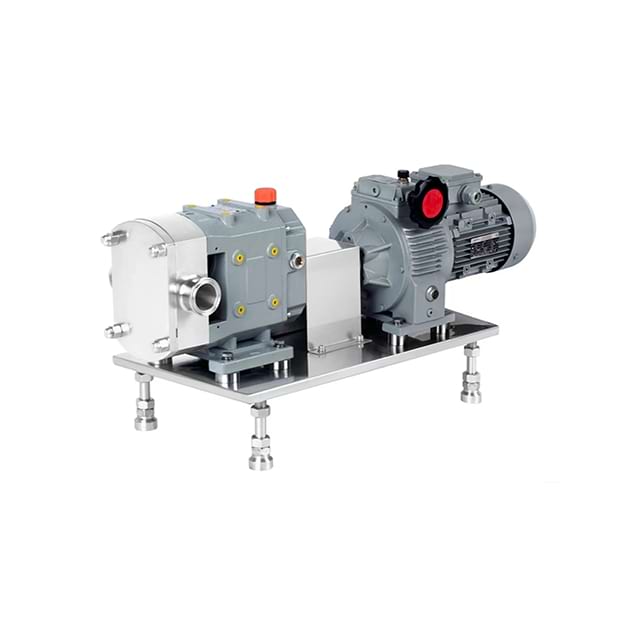
Strict Compliance is Non-Negotiable: True sanitary pumps are defined by their certifications (3A, EHEDG, FDA) and lack of internal "dead angles."
Technology Must Match Viscosity: Centrifugal pumps handle low-viscosity fluids (up to 500 cP), while Positive Displacement (PD) pumps handle high-viscosity and shear-sensitive materials (up to 1,000,000 cP).
Cleanability Dictates Design: Support for CIP (Clean-in-Place) and SIP (Sterilization-in-Place) is baseline; the pump must integrate seamlessly with existing piping and Tank Components.
TCO Outweighs Initial Price: Mean Time Between Failures (MTBF), dry-run capabilities, and remanufacturing options drive the long-term ROI of a sanitary pump.
Industry professionals do not use the word "sanitary" as a marketing buzzword. It represents a legally and mechanically defined standard. A pump earns this classification only when it meets stringent engineering rules. Every component contacting your product must prevent bacterial growth and chemical contamination.
Crevice-free interiors are an absolute requirement. Standard industrial pumps feature internal pockets, sharp corners, and complex sealing mechanisms. These areas create "dead angles." Fluids stagnate in these zones. Bacteria harbor and multiply rapidly inside them. A sanitary design eliminates these risks entirely. Engineers design the pump cavity with smooth, radiused curves. Fluids flow continuously without pooling. The internal geometry guarantees that cleaning solutions sweep every surface effectively.
You must evaluate the specific metallurgy and elastomers used inside the unit. Standard cast iron or basic plastics fail under hygienic conditions.
Metals: Manufacturers build these units primarily from 316L stainless steel. They electropolish the interior surfaces to achieve a flawless mirror finish. This ultra-smooth surface prevents toxic precipitation. It stops proteins and sugars from sticking to the metal. Certain high-end models utilize non-galling nickel alloys. These specialized alloys allow moving parts to run with tighter clearances without seizing.
Seals: Mechanical seals and O-rings must survive harsh chemicals. They must also meet food-grade safety requirements. Industry leaders rely on FDA-compliant elastomers. Common options include Teflon (PTFE), Nitrile rubber, and Viton. You must match the elastomer specifically to your product temperatures.
You must verify mandatory certifications during your procurement process. A pump is only truly sanitary if independent regulatory bodies validate it. Look for compliance with the FDA (Food and Drug Administration). Ensure the unit meets 3A Sanitary Standards, which govern dairy and food processing in North America. European facilities look for EHEDG (European Hygienic Engineering and Design Group) certification. Meat and poultry processors must also verify USDA compliance.
You cannot buy a one-size-fits-all solution. You must match the core pumping mechanism to your specific fluid dynamics. The wrong choice will destroy your product or ruin the equipment. We divide the market into two primary categories: Centrifugal and Positive Displacement.
Centrifugal pumps operate using rotational kinetic energy. An internal impeller spins rapidly. This motion draws fluid into the center and flings it outward. They require priming or a gravity feed. They cannot create a dry suction lift. If you run them empty, you will damage the mechanical seals.
These units excel at high-volume, low-pressure transport. You use them for low-viscosity fluids. Water, milk, and clear juices flow perfectly through them. However, they possess strict limitations. They become highly inefficient when fluid viscosity rises above 500 centipoise (cP). Furthermore, they destroy shear-sensitive fluids. The spinning impeller acts like a blender. It will puree chunky soups. It will also destroy fragile cell cultures in biopharma applications.
Positive Displacement (PD) pumps operate quite differently. They move fixed volumes of fluid by mechanically expanding and contracting internal cavities. Common variations include Rotary Lobe, Circumferential Piston, and Twin-Screw designs. They trap a specific amount of fluid and force it through the discharge pipe.
You choose a PD pump for extreme viscosities. They easily handle honey, heavy dough, or thick gels up to 1,000,000 cP. They also provide highly precise dosing. You can achieve volumetric accuracy to ±1%. Their biggest advantage is product protection. They treat shear-sensitive products extremely gently. You can pump live vaccine cultures safely. Many models can even pass solid objects up to 1 inch in diameter without crushing them.
Feature | Centrifugal Pumps | Positive Displacement Pumps |
|---|---|---|
Working Mechanism | Rotational kinetic energy (impeller) | Expanding/contracting fixed cavities |
Max Viscosity | Up to 500 cP | Up to 1,000,000 cP |
Shear Sensitivity | High (Damages delicate fluids) | Low (Very gentle on fluids) |
Solid Handling | Poor (Blends or crushes solids) | Excellent (Passes solids up to 1 inch) |
Self-Priming | No (Requires gravity feed) | Yes (Can create dry suction lift) |
Technical buyers must evaluate equipment using a structured framework. Do not base your decision on flow rate alone. You must analyze how the unit integrates into your broader processing ecosystem.
System Integration & Footprint: Evaluate your plant layout carefully. Decide whether a horizontal or vertical orientation fits best. Vertical pumps save critical floor space. Discuss how the pump connects to your existing infrastructure. You need specialized sanitary clamps to attach it to filtration units, piping networks, and Tank Components. Ensure all connections maintain the crevice-free standard.
Cleanability (CIP/SIP): Assess the self-draining capabilities of the unit. Modern facilities rely on CIP (Clean-in-Place) and SIP (Sterilization-in-Place) protocols. The equipment must withstand 90°C+ caustic CIP solutions. It must handle high-temperature SIP steam sterilization. It must do all of this without requiring manual teardowns from your maintenance team.
Dry-Run Capabilities: Fluid supply interruptions happen. You must highlight the importance of dry-run capabilities. Modern systems can survive temporary dry-running. Specialized flushed seals and advanced rotor materials prevent the mechanical parts from melting together when the fluid stops flowing.
Efficiency Metrics: Instruct your buying team to evaluate three dimensions of efficiency. Look at hydraulic efficiency first. This measures how well the unit converts energy into fluid pressure. Next, check volumetric efficiency. This ensures leak-free transfer with minimal internal slip. Finally, assess mechanical efficiency. This measures how well the design reduces internal friction.
Drive & Automation Compatibility: Industry 4.0 demands smart equipment. Look for seamless integration with VFDs (Variable Frequency Drives) and PLCs (Programmable Logic Controllers). These electronics ensure continuous duty-cycle management. They optimize motor speeds in real-time. This automation dramatically improves your overall energy efficiency.
Even the most advanced equipment requires diligent oversight. Frame your operations around risk-mitigation. Demonstrate trustworthiness by acknowledging maintenance realities. Always utilize NSF-H1 food-grade lubricants. Monitor your systems continuously for abnormal resonance or vibration. Here are the common failures you must watch out for.
Cavitation destroys equipment rapidly. The physics are straightforward but destructive. Fluid pressure drops below its vapor pressure inside the casing. This pressure drop causes the fluid to boil instantly. Tiny vapor bubbles form. As fluid moves to the high-pressure discharge side, these bubbles implode violently. The implosions sound like marbles rattling inside the pump. They literally erode the stainless steel. You prevent cavitation through proper pump sizing. You must also optimize your inlet pressure. Ensure your Net Positive Suction Head Available (NPSHa) exceeds the pump requirements.
Seals represent the most vulnerable point in your system. Seal degradation leads directly to leaks and contamination. Chemical incompatibility causes many seal failures. Strong CIP fluids can attack standard elastomers. Physical wear from abrasive fluids also destroys seals over time. You must monitor seal faces regularly. Replace them before they fail completely.
Suction issues halt production lines instantly. Loss of prime occurs when air enters the system. Address the risks of air ingress immediately. Check all suction-side gaskets and clamps. Clogged filters also restrict flow, causing the unit to lose its vacuum. Implement strict inspection schedules for all inlet strainers.
Symptom | Probable Cause | Corrective Action |
|---|---|---|
Rattling noise (like marbles) | Cavitation (Low inlet pressure) | Increase NPSHa; check for clogged inlet filters. |
Fluid leaking from shaft | Seal degradation | Replace mechanical seals; verify CIP chemical compatibility. |
Sudden drop in flow rate | Loss of prime / Air ingress | Tighten suction-side clamps; inspect O-rings for air leaks. |
Excessive motor heat | High fluid viscosity / Friction | Reduce operating speed via VFD; check for rotor galling. |
Selecting the ideal processing equipment requires strict attention to detail. It is a precise balancing act. You must align fluid viscosity with the correct pumping mechanism. You must protect shear-sensitive products from destructive mechanical forces. Most importantly, you must uphold rigorous compliance standards without compromise.
Advise your technical buyers to act systematically. First, audit your specific fluid properties. Document your exact viscosity in centipoise, operating temperatures, and maximum solid sizes. Next, review your facility CIP and SIP protocols. Ensure your new equipment can withstand your preferred cleaning chemicals. Finally, consult with specialized fluid engineers. Model your volumetric requirements carefully before you request quotes. Taking these precise steps ensures you procure a reliable, hygienic system that protects your product integrity for years.
A: Industrial pumps use cast iron or standard plastics and have internal crevices. Sanitary pumps use 316L electropolished stainless steel. They feature food-grade seals and zero dead angles. This specialized construction allows them to meet strict 3A and EHEDG hygiene certifications.
A: Generally, no. They lose efficiency rapidly above 500 cP. The spinning impeller creates excessive friction and heat. For highly viscous fluids like syrups, dough, or heavy gels, a positive displacement pump is required.
A: Clean-in-Place (CIP) and Sterilization-in-Place (SIP) refer to automated cleaning protocols. They indicate the pump's ability to be fully cleaned and sterilized by circulating hot caustic solutions or steam without dismantling the equipment.
A: You prevent it by ensuring the Net Positive Suction Head Available (NPSHa) exceeds the pump's required suction head. You must optimize pipe sizing, keep inlet filters clean, and avoid excessive pump operating speeds.