Please Choose Your Language


Views: 0 Author: Site Editor Publish Time: 2026-05-12 Origin: Site


Operating a Sanitary Pump in food, beverage, or pharmaceutical applications requires a strict balance. You must ensure regulatory compliance according to FDA, 3-A, and EHEDG guidelines. You must also maximize daily production uptime. Relying on a reactive, run-it-until-it-breaks methodology leads to disastrous product recalls. It causes severely compromised batches and prolonged operational paralysis. Establishing a baseline frequency for cleaning and mechanical maintenance goes beyond simply avoiding failure. It ensures verifiable hygienic processing and extends the operational longevity of your equipment.
This guide provides an evidence-based framework. You will learn how to evaluate, schedule, and optimize your fluid handling maintenance. We outline standard cleaning cycles and mechanical diagnostics. You will also discover strategies to empower floor operators. This proactive mindset prevents minor deviations from escalating into major structural breakdowns. We prioritize actionable steps to keep your processing lines clean, compliant, and highly efficient.
Cleaning Frequencies: Clean-in-Place (CIP) must occur between every batch or product changeover using a standard 5-step wash cycle to prevent bacterial growth and cross-contamination.
Maintenance Matrix: Mechanical maintenance scales from daily sensory checks (vibration, heat) to extensive annual strip-downs (seal and impeller replacements).
Diagnostic Red Flags: Flow efficiency drops, cavitation noises (sounding like rolling marbles), and mechanical seal leaks are non-negotiable indicators of overdue maintenance.
Strategic Upgrades: Frequent seal failures indicate a mismatched application, requiring an upgrade in pump specifications or related tank components, rather than repetitive repairs.
Many facility managers struggle to balance production demands against equipment care. We contrast the reactive approach directly against the proactive approach. Corrective maintenance represents the reactive path. You wait for a component failure to dictate your actions. This strategy results in sudden, unscheduled downtime. It also creates a high risk for batch contamination. Furthermore, you must pay expensive expedited shipping costs for emergency replacement parts. Production stops completely while you wait for repairs.
A preventive approach anticipates component wear. It schedules maintenance during planned operational pauses. A successful maintenance schedule eliminates destructive operational habits entirely. You prevent "deadheading" completely. Deadheading means running the equipment against closed discharge valves. It boils the internal fluid rapidly and destroys internal clearances. Proactive schedules also minimize the risk of dry running. Dry running melts elastomers and shatters mechanical seals almost instantly.
Operator empowerment drives this proactive culture. A robust maintenance protocol relies heavily on empowering your floor operators. Floor technicians interact directly with the machinery every single shift. You must train them to monitor baseline metrics accurately. They should record pressure, flow, vibration, and temperature daily. Operators must report subtle deviations early. This allows maintenance teams to schedule interventions long before a mechanical failure occurs. We strongly recommend creating a simple digital logging system. It helps operators record sensory data without disrupting their core tasks.
Ignoring minor seal drips until they become major puddles.
Running equipment dry during self-priming phases.
Failing to stock critical replacement seals on site.
Bypassing daily visual inspections to save time.
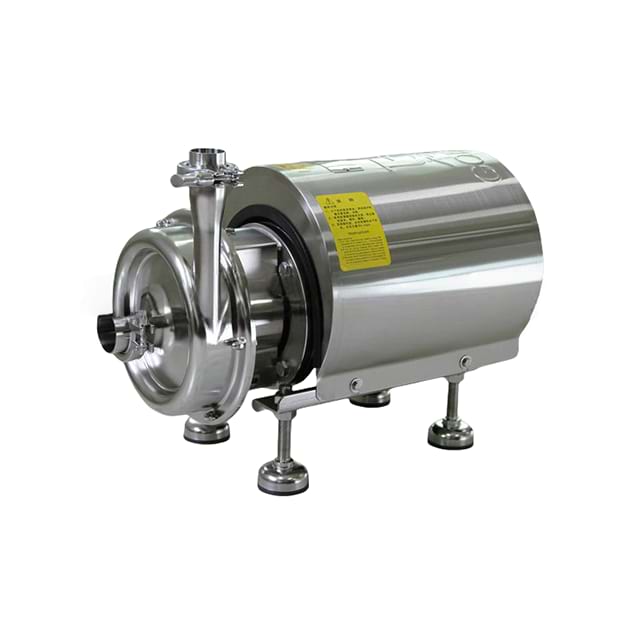
Routine cleaning must be performed consistently to ensure product safety. You execute cleaning cycles after every production run. You also clean the equipment during product changeovers. Many plants mandate a complete cleaning cycle at the end of every shift. We rely on the 5-Step Clean-in-Place (CIP) framework. CIP allows automated cleaning without dismantling the pipework. It provides highly verifiable sanitation when executed correctly.
Pre-Rinse (104°–140° F): This initial stage flushes out heavy soils. The warm temperature partially melts solidified fats. It clears debris safely. It achieves this without baking proteins onto the stainless steel surfaces.
Caustic Wash (140°–185° F): You utilize a low-foaming sodium hydroxide solution. Keep the concentration strictly between 0.5% and 2%. This chemical phase breaks down tough organic matter. Low-foaming solutions prevent excessive suds inside the casing. Excessive suds cause harmful air pockets and initiate cavitation.
Intermediate Rinse: This step uses fresh, clean water. It clears all residual alkaline wash solutions from the pipework. This protects the subsequent acidic sanitizing phases from chemical neutralization.
Final Rinse: You flush the system thoroughly. Use ambient pure water or deionized water. This guarantees no lingering cleaning agents remain in the fluid path.
Sanitizing Rinse: We recommend the application of peracetic acid. Industry experts prefer it over standard sodium hypochlorite. Bleach causes stainless steel corrosion and microscopic pitting over time. Pitting creates breeding grounds for bacteria. Peracetic acid neutralizes remaining microbes safely and leaves no corrosive residue.
Temperature control defines CIP success. If the pre-rinse water is too hot, proteins denature and stick to the metal. If the caustic wash is too cold, fats remain solid and clog the system. You must calibrate your heating elements weekly to ensure optimal cleaning parameters.
Proper maintenance requires layered inspection frequencies. You must blend daily sensory checks with strict mechanical calibrations. We categorize these tasks into a scalable matrix. This ensures nothing gets overlooked during busy production periods.
Your floor team must monitor the equipment visually and audibly every day. Check the external casing for excessive heat. Look for sudden casing discoloration. Monitor the motor for unexpected amp draws. High amp draws indicate internal friction or bearing wear. Listen carefully for anomalous sounds. A rattling sound strongly indicates cavitation. Visually inspect the baseplate. Look for mechanical seal leaks or fluid pooling around the pedestal.
Weekly checks focus on quantifiable performance metrics. Record your suction and discharge pressures manually. Verify the unit hits its targeted flow rate accurately. Dropping flow rates indicate internal wear or clogged strainers. Monthly checks focus heavily on mechanical health. Check the lubrication levels in the bearing frame or gearbox. Add oil or grease as specified by the manufacturer. Verify the alignment between the pump head and the drive motor. Misalignment causes premature shaft wear and destructive harmonic vibrations.
Yearly tasks require deeper mechanical scrutiny. You perform these roughly every 5,000 operational hours. Inspect the shaft for axial movement. Replace all degraded elastomers and O-rings. You must also test secondary Tank Components connected to the fluid line. Bi-yearly tasks occur around 10,000 hours. You must remove the unit from the piping entirely. Execute a full teardown on a clean workbench. Proactively replace mechanical seals, wear rings, and impellers. Do this before they suffer a catastrophic failure.
Frequency | Primary Focus | Specific Actions Required | Estimated Time |
|---|---|---|---|
Daily | Sensory & Baseline | Monitor heat, listen for cavitation, check for leaks, verify amp draw. | 10-15 Minutes |
Weekly | Performance Metrics | Record suction/discharge pressures, verify target flow rates. | 20-30 Minutes |
Monthly | Calibration | Check lubrication levels, verify drive-to-pump alignment. | 30-45 Minutes |
Yearly (5,000 Hrs) | Component Inspection | Replace elastomers, inspect axial movement, test secondary tank valves. | 2-3 Hours |
Bi-Yearly (10,000 Hrs) | Full Teardown | Remove from piping. Replace mechanical seals, wear rings, and impellers. | 6-8 Hours |
Even the best maintenance schedules occasionally miss underlying issues. Equipment communicates its distress through clear physical symptoms. You must recognize these three major red flags. Ignoring them leads to catastrophic failure and expensive secondary damage.
Performance drops signal severe internal issues. The equipment might take significantly longer to transfer the same volume of product. Discharge pressure might drop unexpectedly. These symptoms mean the impeller may be worn down. Alternatively, the discharge line or associated Tank Components may be restricted by debris. You must audit the entire transfer line immediately. Check all inline strainers and filter housings. Clean them thoroughly. If the flow remains low, you must inspect the internal clearances.
Vibration acts as a critical early warning system. You might hear a distinct rattling noise. It sounds exactly like marbles rolling inside the casing. This specific noise indicates cavitation. Cavitation happens when suction is starved. Fluid vaporizes inside the casing. These vapor bubbles form and violently implode against the metal. Left unchecked, this violent implosion will pit the stainless steel. It will eventually shatter the impeller entirely. You must increase the suction pressure immediately to stop it.
A leaking system compromises hygiene instantly. It introduces outside bacteria into the product stream. Dried or cracked seals allow fluid to escape onto the floor. If you use double mechanical seals, watch the barrier fluid closely. A sudden drop in the barrier fluid level points to dry-running damage. It also signals end-of-life wear on the inboard seal. You must halt production and replace the compromised seals immediately. Never attempt to tighten a leaking mechanical seal; you must replace it.
Observed Symptom | Probable Root Cause | Immediate Action Required |
|---|---|---|
"Marbles rolling" noise | Cavitation (Starved Suction) | Clear suction line, clean strainers, check fluid temp. |
Sudden flow rate drop | Worn impeller or clogged discharge | Inspect internal clearances, check downstream valves. |
Excessive motor heat | Deadheading or bearing failure | Open discharge valves immediately, check lubrication. |
Puddling under pedestal | Mechanical seal failure | Shut down pump, replace entire seal assembly. |
Facilities often fall into the frustrating trap of endless repairs. You must evaluate long-term scalability strategically. Replacing the same components repeatedly indicates a deeper systemic flaw. You need to assess whether your equipment truly matches your current production demands.
Look closely at your repair logs. Are you replacing shaft seals or O-rings every few months? If so, the maintenance schedule is not the root issue. The hardware specification causes the problem. Chronic failures mean the operational parameters exceed the equipment's design limits. You must stop applying temporary bandages to chronic wounds.
Evaluate recent changes in your processing environment. Fluid viscosity, temperature, or abrasiveness often change as recipes evolve. These changes stress older equipment severely. Consider upgrading to hardened seal faces. Silicon Carbide seals handle abrasive liquids much better than standard carbon faces. You might need a different equipment topology entirely. Shifting from a high-speed centrifugal unit to a slower positive displacement model often solves viscosity issues. Positive displacement models handle sticky, thick syrups without shearing the product or destroying seals.
Global supply chain constraints make just-in-time repair exceptionally risky. Waiting weeks for a specific replacement part halts production completely. Facilities should maintain a localized inventory. Stock up on high-wear spare parts proactively. Keep extra seals, gaskets, and bearings on site in a climate-controlled cabinet. This localized inventory ensures continuous uptime during sudden failures. It transforms a multi-week crisis into a two-hour repair job.
Conduct a comprehensive baseline audit. Compare your current performance data against the original OEM curves. If your equipment operates far below the curve, you face an efficiency crisis. This audit determines your best path forward. An outright replacement often proves more efficient than continuous part swapping. Upgrading to modern, CIP-optimized designs saves countless labor hours and reduces chemical waste.
Proper fluid handling maintenance merges rigorous, daily CIP regimens with a highly structured mechanical inspection matrix. You cannot rely on reactive fixes in sanitary processing environments. Contamination risks and downtime penalties are simply too high. By adhering to the 5-step CIP framework, you ensure verifiable hygiene. By following the daily, weekly, and yearly maintenance schedules, you protect your mechanical assets from premature destruction.
Shift your facility's mindset from purely operational to asset lifecycle management. Documenting baseline performance data allows teams to spot degradation weeks before a failure happens. Empower your operators to listen, look, and report anomalies immediately.
Review your current maintenance logs against the OEM specifications today. Audit your local spare parts inventory to ensure you hold critical wear items. Finally, consult with a fluid handling specialist to evaluate chronic problem areas in your processing line. Proactive care ensures your equipment runs efficiently, safely, and continuously.
A: While effective for sanitizing, prolonged use of bleach causes severe pitting and corrosion in stainless steel. The industry standard leans heavily toward peracetic acid for the final sanitizing rinse. It neutralizes microbes effectively without leaving corrosive chlorides behind.
A: CIP allows the equipment to be cleaned without removal from the piping system via automated wash cycles. COP requires full disassembly of the fluid handling unit and associated components. You then manually wash these parts in a dedicated sanitizing vat. COP is typically required for highly viscous or sticky products.
A: Cavitation is a system design issue, not just a hardware flaw. Ensure your suction lines remain clear and strainers are clean. Keep the fluid temperature within design limits. Most importantly, ensure the net positive suction head available (NPSHa) exceeds the equipment's minimum requirement.