Please Choose Your Language


Views: 0 Author: Site Editor Publish Time: 2026-03-31 Origin: Site


Choosing the right mixing tank is a critical decision for any industrial operation that involves blending, homogenizing, or processing liquids, semi-solids, or suspensions. Whether you operate in the chemical, pharmaceutical, food and beverage, cosmetics, or environmental sector, the selection of a mixing tank directly impacts product quality, operational efficiency, and process safety. Selecting an inappropriate tank can lead to uneven mixing, contamination, prolonged processing times, or costly downtime. Understanding the key parameters, design considerations, and operational requirements is essential to ensure that the mixing system aligns with production goals and regulatory standards.
Mixing tanks are more than mere vessels; they are engineered systems designed to provide controlled agitation, precise temperature management, and consistent product quality. Proper selection requires knowledge of the materials being processed, the intended mixing outcomes, and the process conditions. The goal of this article is to provide a comprehensive guide to help industrial professionals, engineers, and operators make informed decisions when selecting a mixing tank. It also offers insight into how partnering with an experienced manufacturer can further optimize process efficiency and reliability.
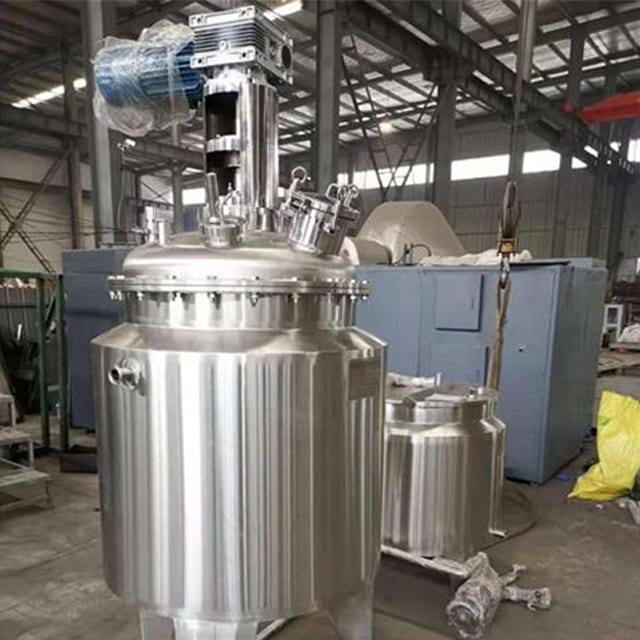
A mixing tank serves to combine two or more substances into a homogeneous mixture. The purpose may vary depending on industry requirements, including dissolving solids in liquids, maintaining a uniform suspension, emulsifying immiscible liquids, or facilitating chemical reactions. Unlike simple storage tanks, mixing tanks are equipped with agitation systems that actively manipulate the contents to achieve the desired level of uniformity and consistency.
The quality of the final product is heavily dependent on the mixing process. In the chemical industry, proper mixing ensures complete reactions and prevents phase separation. In food and beverage production, thorough blending guarantees flavor consistency and texture. For pharmaceuticals and cosmetics, uniformity is crucial to meeting efficacy and safety standards. Mixing tanks also enable proper heat transfer, which is essential for temperature-sensitive processes and reactions.
The first consideration in selecting a mixing tank is the compatibility of the tank material with the substances being processed. Materials must resist corrosion, prevent contamination, and withstand operational conditions. Common materials include stainless steel, carbon steel with protective linings, and specialized alloys for highly reactive chemicals. In food and pharmaceutical applications, polished stainless steel is preferred to meet stringent hygiene and sanitation requirements. Selecting the right material ensures both durability and safety during operations.
Mixing tanks are available in a wide range of capacities, from small laboratory vessels to large industrial tanks. Determining the required capacity involves evaluating production volumes, batch sizes, and future scalability. Undersized tanks can lead to inefficient mixing and prolonged processing times, whereas oversized tanks may result in higher energy consumption and uneven mixing if not properly designed. Accurately assessing the required capacity helps optimize both performance and operational costs.
The agitation system is central to a mixing tank’s effectiveness. Different impeller types and configurations are suited to various fluid properties:
Radial flow impellers produce high turbulence for vigorous mixing.
Axial flow impellers provide gentle circulation, suitable for delicate formulations.
Ribbon, anchor, or paddle mixers handle high-viscosity fluids and pastes.
High-shear mixers enable rapid dispersion, emulsification, and fine particle suspension.
Selecting the appropriate agitator ensures that the mixture achieves uniformity without compromising product integrity. The choice depends on viscosity, density, solids content, and the desired final outcome.
Many industrial processes require precise control of temperature or pressure. Jacketed tanks allow for heating or cooling through steam, water, or oil circulation, while insulated vessels maintain process stability. Pressure-rated tanks may be necessary for reactions involving volatile chemicals or for preventing contamination. Considering temperature and pressure requirements during tank selection ensures that the system can handle process demands reliably.
For industries such as food, beverage, and pharmaceuticals, sanitation is critical. Tanks must allow for clean-in-place (CIP) operations and easy maintenance. Smooth, polished surfaces and sanitary seals prevent bacterial growth and contamination. Compliance with regulatory standards, including FDA and GMP guidelines, must be factored into the selection process to guarantee both product safety and legal compliance.
Modern mixing tanks increasingly rely on automation for improved consistency and operational efficiency. Variable speed drives, programmable logic controllers (PLCs), and sensors allow precise control over mixing speed, temperature, and duration. Automation reduces human error, enables real-time monitoring, and facilitates data collection for quality assurance and process optimization.
The physical design of the mixing tank influences flow patterns, agitation efficiency, and cleaning. Cylindrical vessels are common for general mixing, while conical or sloped bottoms facilitate discharge and prevent sediment accumulation. Baffles or internal structures may be used to enhance mixing efficiency, particularly in high-viscosity applications. Proper design ensures uniform distribution of materials and prevents stagnation or dead zones.
In chemical manufacturing, mixing tanks must handle reactive or corrosive materials safely. Considerations include material selection, chemical resistance, agitation intensity, and the ability to operate under controlled temperature and pressure conditions. Custom configurations may be necessary to optimize reaction rates and yield consistent products.
Food and beverage mixing tanks prioritize hygiene, gentle mixing, and temperature control. Stainless steel vessels with smooth surfaces, sanitary fittings, and CIP capabilities are essential. The tank must accommodate specific process needs, whether blending beverages, emulsifying sauces, or maintaining dairy product consistency.
Pharmaceutical applications demand sterile operations, precise dosing, and strict adherence to regulatory standards. Mixing tanks in this sector are often equipped with high-quality seals, sanitary valves, and automated controls. Materials, agitation type, and cleaning capabilities are critical to ensure that products meet efficacy, safety, and compliance requirements.
High-shear mixing tanks are ideal for cosmetics, adhesives, and other specialty materials. They provide rapid dispersion of powders or droplets into liquids, maintaining uniform texture, color, and performance. Temperature-sensitive processes require jacketed vessels and precise monitoring to prevent degradation.
Mixing tanks are also used in wastewater treatment and environmental processing. They help maintain uniform chemical concentrations, support biological treatment processes, and prevent sedimentation. The choice of agitation system and tank design ensures effective mixing without introducing excessive turbulence or energy consumption.
Proper measurement and controlled charging of materials are critical. Overfilling or uneven loading can compromise mixing efficiency and introduce operational hazards. Gradual addition of ingredients ensures even distribution and minimizes the risk of clumping or incomplete blending.
Starting at low agitation speeds prevents splashing, vortexing, and air entrainment. Gradually increasing speed allows uniform distribution of ingredients while reducing stress on sensitive materials. Mixing duration should be determined based on the viscosity, particle size, and desired homogeneity.
Temperature control is essential in processes where reactions, solubility, or product stability are temperature-sensitive. Continuous monitoring with probes or automated controls helps maintain consistent conditions, improving both quality and efficiency.
Regular inspection and maintenance of seals, bearings, impellers, and drive systems prevent unplanned downtime and ensure long-term performance. Tanks designed for easy cleaning reduce contamination risk and facilitate compliance with hygiene standards.
Choosing the wrong tank can result in several operational challenges. Inadequate mixing leads to product inconsistency, while improper material selection may cause corrosion or contamination. Over- or under-sized tanks can affect energy efficiency and throughput, and insufficient temperature control can degrade sensitive products. Addressing these issues requires a thorough understanding of process requirements and careful evaluation of tank design, materials, and control systems.
Selecting the right mixing tank is a decision that affects operational efficiency, product quality, and safety across industries. Understanding material compatibility, batch size, agitation requirements, temperature and pressure needs, sanitation standards, and automation options is essential. By partnering with an experienced manufacturer, such as Wenzhou Tianxu Machinery Technology Co., Ltd., companies can access tailored solutions that meet specific process demands. This collaboration ensures high-quality construction, precise process control, and reliable support, enabling manufacturers to optimize performance, improve consistency, and maintain regulatory compliance. Engaging with a trusted and knowledgeable partner provides not only equipment but also expertise that supports long-term industrial success.
Q: How do I determine the right size of a mixing tank?
A: The tank size should match production volume, batch size, and future scalability. Oversized or undersized tanks can impact mixing efficiency and energy consumption.
Q: What factors influence the choice of agitator in a mixing tank?
A: Fluid viscosity, density, solids content, and desired uniformity dictate impeller type, configuration, and agitation speed to achieve optimal mixing.
Q: Are mixing tanks required to have temperature control?
A: Temperature control is critical in processes involving chemical reactions, solubility, or heat-sensitive materials. Jackets, coils, or other heating/cooling systems are commonly used.
Q: Can I use the same mixing tank for different industries?
A: While some tanks are versatile, industry-specific requirements such as hygiene, chemical resistance, and regulatory compliance often necessitate customized tanks for each application.