Please Choose Your Language


Views: 0 Author: Site Editor Publish Time: 2026-04-07 Origin: Site


For industries that prioritize hygiene, quality, and regulatory compliance—such as food and beverage, pharmaceuticals, biotechnology, and cosmetics—the decision to invest in a sanitary mixing tank is crucial. A mixing tank serves not only as a container for blending ingredients but also as a controlled environment for chemical reactions, temperature management, and product homogenization. Selecting the right sanitary tank impacts every aspect of production: efficiency, consistency, compliance, safety, and ultimately, profitability.
Sanitary mixing tanks differ from standard tanks because they are specifically engineered to meet stringent hygiene standards. Their design minimizes the risk of contamination, facilitates effective cleaning, and ensures the integrity of sensitive ingredients. However, the selection process is multifaceted. Factors like material composition, agitation system, capacity, temperature and pressure control, and cleanability must all be considered to match operational needs. In addition, automation, energy efficiency, and regulatory compliance play critical roles in determining long-term performance and return on investment.
This comprehensive guide explores five critical factors to consider when purchasing a sanitary mixing tank. Each factor is examined in detail, providing practical guidance, technical insights, and industry-specific considerations. At the end, we discuss how partnering with an experienced manufacturer like Wenzhou Tianxu Machinery Technology Co., Ltd. ensures a solution tailored to your operational and regulatory requirements.
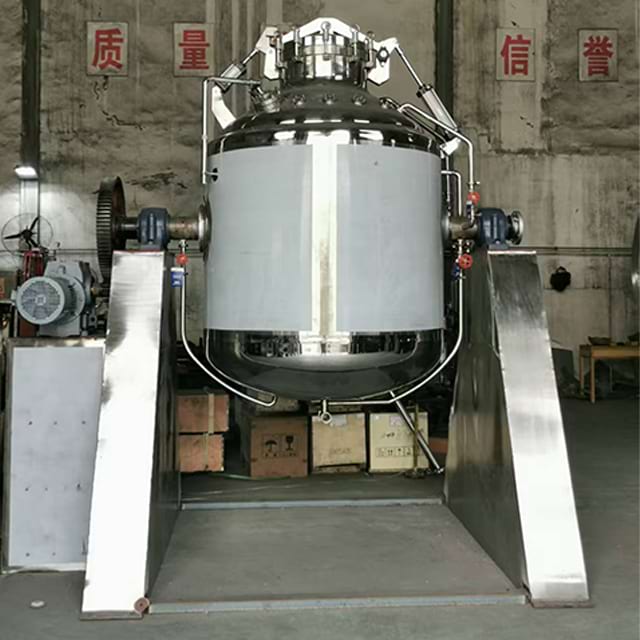
Material selection is arguably the most critical factor in sanitary mixing tank performance. The tank must resist corrosion, withstand chemical reactions, and maintain product purity. Stainless steel is widely regarded as the standard material due to its excellent corrosion resistance, durability, and compliance with food-grade and pharmaceutical regulations. Grades 304 and 316 are common, with 316 providing enhanced resistance to harsh chemicals and high-salinity solutions.
Using inappropriate materials can lead to contamination, accelerated wear, and potential product rejection. For instance, carbon steel without proper lining may corrode when exposed to acidic or high-salt solutions, leading to rust particles entering the mixture. Such contamination not only reduces product quality but can also create compliance and safety issues.
Sanitary tanks must meet strict hygiene requirements. The internal surfaces should be polished to a smooth finish, typically with a roughness average (Ra) of 0.4 microns or less, to prevent bacterial growth and facilitate effective cleaning. Welds should be seamless and continuous, and all fittings should adhere to sanitary standards. Tanks designed for pharmaceutical and food applications must often meet FDA, GMP, EHEDG, or 3A certifications, ensuring that materials are suitable for contact with sensitive ingredients.
High-quality materials extend the operational lifespan of a mixing tank and reduce maintenance costs. Stainless steel resists pitting, corrosion, and chemical degradation, even under frequent cleaning cycles or exposure to harsh chemicals. Selecting the right material reduces downtime and ensures long-term reliability, which is particularly important in high-volume production environments.
Determining the right tank capacity involves evaluating current production volumes, batch sizes, and expected throughput. Undersized tanks may require multiple batch cycles to meet demand, leading to inefficiency and inconsistent product quality. Oversized tanks, on the other hand, may result in poor mixing efficiency if the volume is too low relative to the tank size, increasing energy consumption without benefits.
Manufacturers must anticipate growth. A tank that meets today’s requirements may be insufficient as production scales up. It is prudent to consider modular tank designs or slightly larger capacities to accommodate future growth, ensuring that the equipment remains useful for years without requiring a complete system overhaul.
Physical dimensions are another important consideration. Ceiling heights, floor loading limits, and available floor space all influence tank selection. Additionally, the tank should integrate seamlessly with existing piping, pumps, heating/cooling systems, and automation. Poor planning can lead to installation challenges, increased costs, and operational inefficiencies.
The agitation system is essential to the performance of a sanitary mixing tank. Different products and viscosities require specific impeller designs. Radial flow impellers are suitable for high-turbulence mixing, dispersing powders, or breaking up clumps in low-viscosity fluids. Axial flow impellers provide gentle circulation, ideal for emulsions or delicate formulations that could be damaged by high shear. Ribbon, paddle, and anchor impellers handle high-viscosity liquids or semi-solids, ensuring consistent homogenization without creating excessive shear that may alter product properties.
Mixing effectiveness also depends on the motor’s power and speed control. High-viscosity or dense materials require more powerful motors and optimized impeller designs to achieve uniform mixing. Variable speed drives provide flexibility, allowing operators to adjust agitation according to the process stage, protecting sensitive ingredients while ensuring thorough blending.
Consistent product quality depends on proper circulation within the tank. Baffles, scrapers, and strategically positioned impellers prevent dead zones where ingredients could settle. For multi-component products, achieving homogeneity is critical to ensure consistent taste, chemical composition, or therapeutic potency, depending on the industry.
Temperature control is vital in maintaining product stability and reaction efficiency. Jacketed tanks, circulating fluids, or internal coils provide precise heating and cooling. Steam jackets can heat quickly for processes requiring thermal activation, while chilled water or glycol systems enable controlled cooling, preventing overheating or thermal degradation of sensitive ingredients.
Some formulations require the tank to operate under pressure or vacuum conditions. Pressure-rated vessels enable controlled reactions and prevent contamination. Vacuum-assisted mixing can help remove air bubbles from viscous materials or delicate emulsions, improving product consistency and quality.
Modern tanks often feature integrated sensors and automated controls for temperature, pressure, and agitation. Real-time monitoring and automatic adjustments maintain optimal conditions, reduce human error, and provide data logging for regulatory compliance. Automation ensures consistent outcomes across batches and increases overall operational efficiency.
Effective sanitation is non-negotiable in food, beverage, and pharmaceutical industries. Clean-in-place systems allow automated washing, rinsing, and sterilization without disassembling the tank. CIP reduces downtime, ensures consistent hygiene, and minimizes operator exposure to cleaning chemicals.
Sanitary tanks require smooth, polished surfaces free of crevices. Welds must be continuous and seamless to prevent bacterial growth. Valves, seals, and fittings should be designed for easy access during inspection and cleaning, further ensuring product safety and compliance.
Compliance with FDA, GMP, EHEDG, or 3A standards is essential. Sanitary mixing tanks must meet certification requirements for materials, surface finishes, cleaning procedures, and operational safety. Compliance protects consumers, maintains brand reputation, and ensures legal conformity.
While upfront costs are important, long-term operational efficiency, maintenance, and product quality are equally critical. Investing in a high-quality tank reduces downtime, repair costs, and product losses, providing better return on investment over the tank’s lifecycle.
Regular inspection, lubrication of moving parts, seal replacement, and cleaning schedules are essential to maximize longevity. Tanks designed with accessible components and modular designs reduce maintenance time and improve overall operational efficiency.
Energy-efficient tanks incorporate insulation, optimized heating/cooling jackets, and efficient impellers. Reducing energy consumption lowers operating costs and contributes to sustainable manufacturing practices, which is increasingly important for environmentally conscious companies.
Selecting a sanitary mixing tank requires careful consideration of material compatibility, capacity, agitation systems, temperature and pressure control, and sanitation. Each factor affects product quality, operational efficiency, and regulatory compliance. By addressing these critical considerations, manufacturers can ensure consistent production, minimize risk, and maintain high-quality standards.
Partnering with an experienced manufacturer such as Wenzhou Tianxu Machinery Technology Co., Ltd. can further enhance outcomes. Their expertise in designing, engineering, and supplying sanitary mixing tanks ensures that the equipment is tailored to specific industry requirements. By choosing a trusted partner, companies gain access to reliable, efficient, and compliant solutions, backed by professional support and long-term service. Engaging with a knowledgeable manufacturer ensures safe, effective, and sustainable operations, helping businesses achieve both immediate and long-term production goals.
Q: What makes a mixing tank “sanitary”?
A: A sanitary mixing tank is designed with smooth, polished surfaces, seamless welds, and hygienic fittings to prevent contamination and comply with industry standards.
Q: Why is agitation system selection important?
A: The impeller type, configuration, and speed affect mixing efficiency, product homogeneity, and the integrity of sensitive ingredients.
Q: How does temperature control impact product quality?
A: Proper temperature control prevents degradation, ensures consistent viscosity, supports chemical reactions, and maintains stability for heat-sensitive materials.
Q: What industries benefit most from sanitary mixing tanks?
A: Food and beverage, pharmaceuticals, biotechnology, cosmetics, and specialty chemicals industries rely heavily on sanitary tanks to meet hygiene and quality standards.